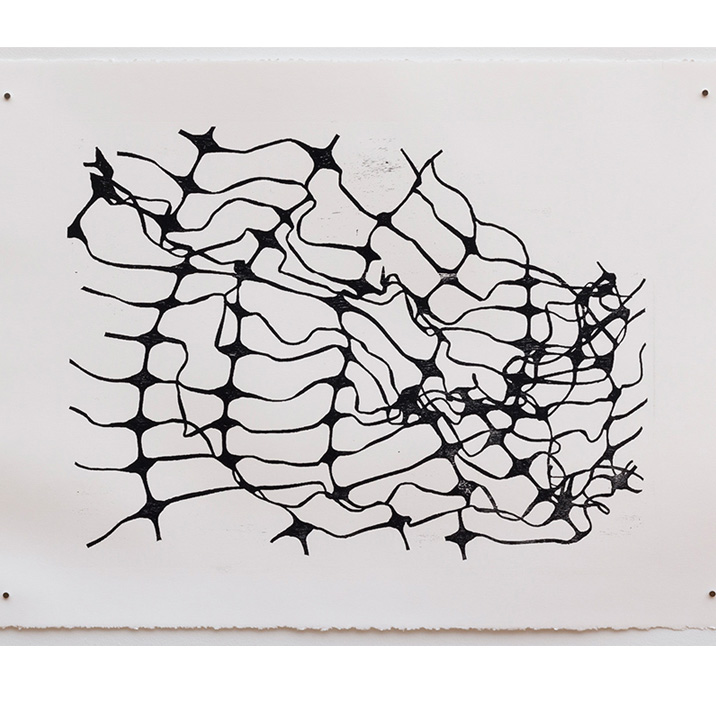
My current body of work looks into the construction and deconstruction of my environment. I am drawn to the repetition, scale and materials that are used to reshape the landscape with highways, buildings and bridges. I am particularly interested in the construction of our infrastructure, which allows us to move more quickly from one place to the next in greater distances and in greater numbers. This faster pace makes it easier to ignore the environment around us, but during times of construction, we are forced to slow down and hopefully, look up.
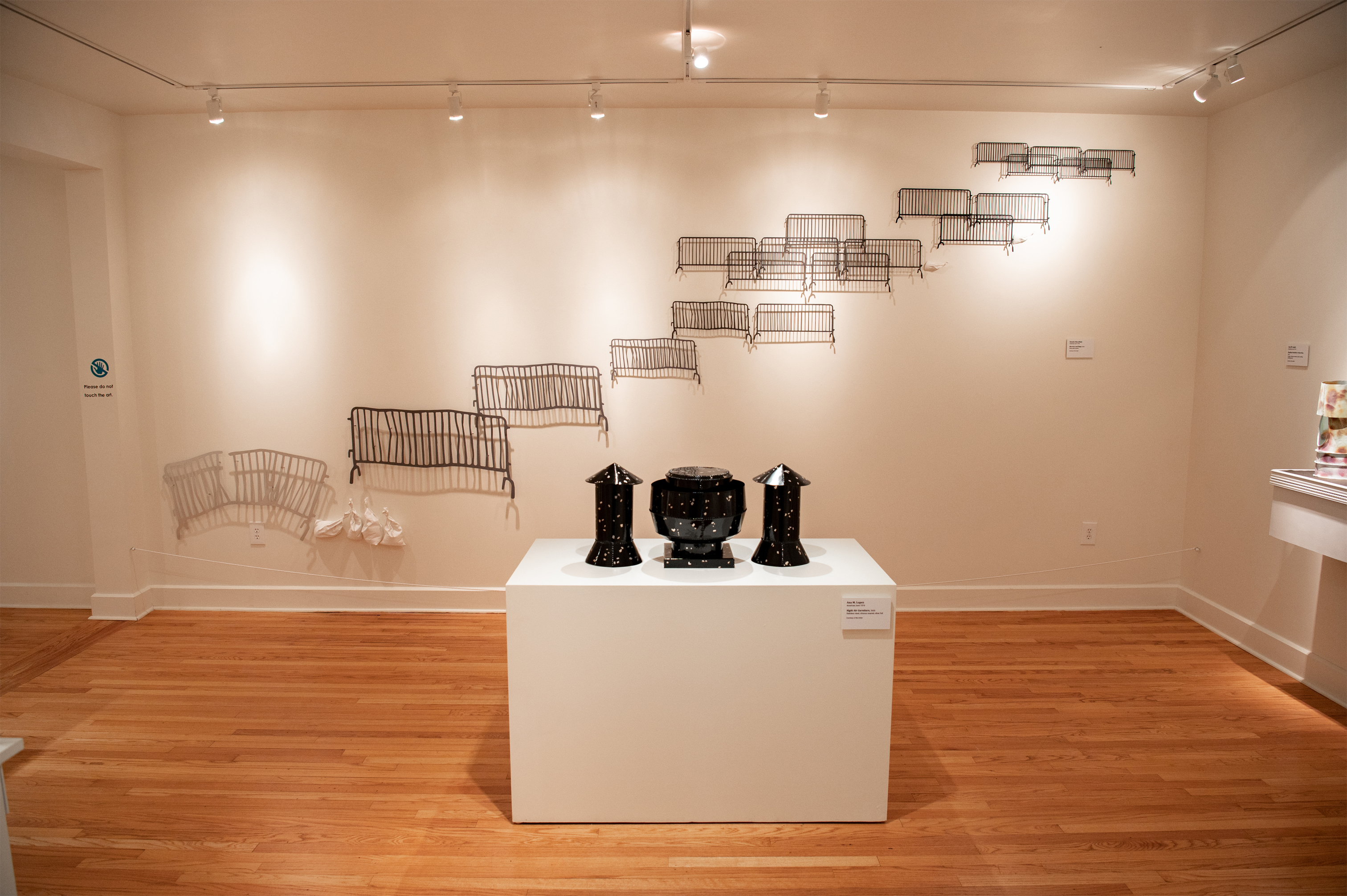
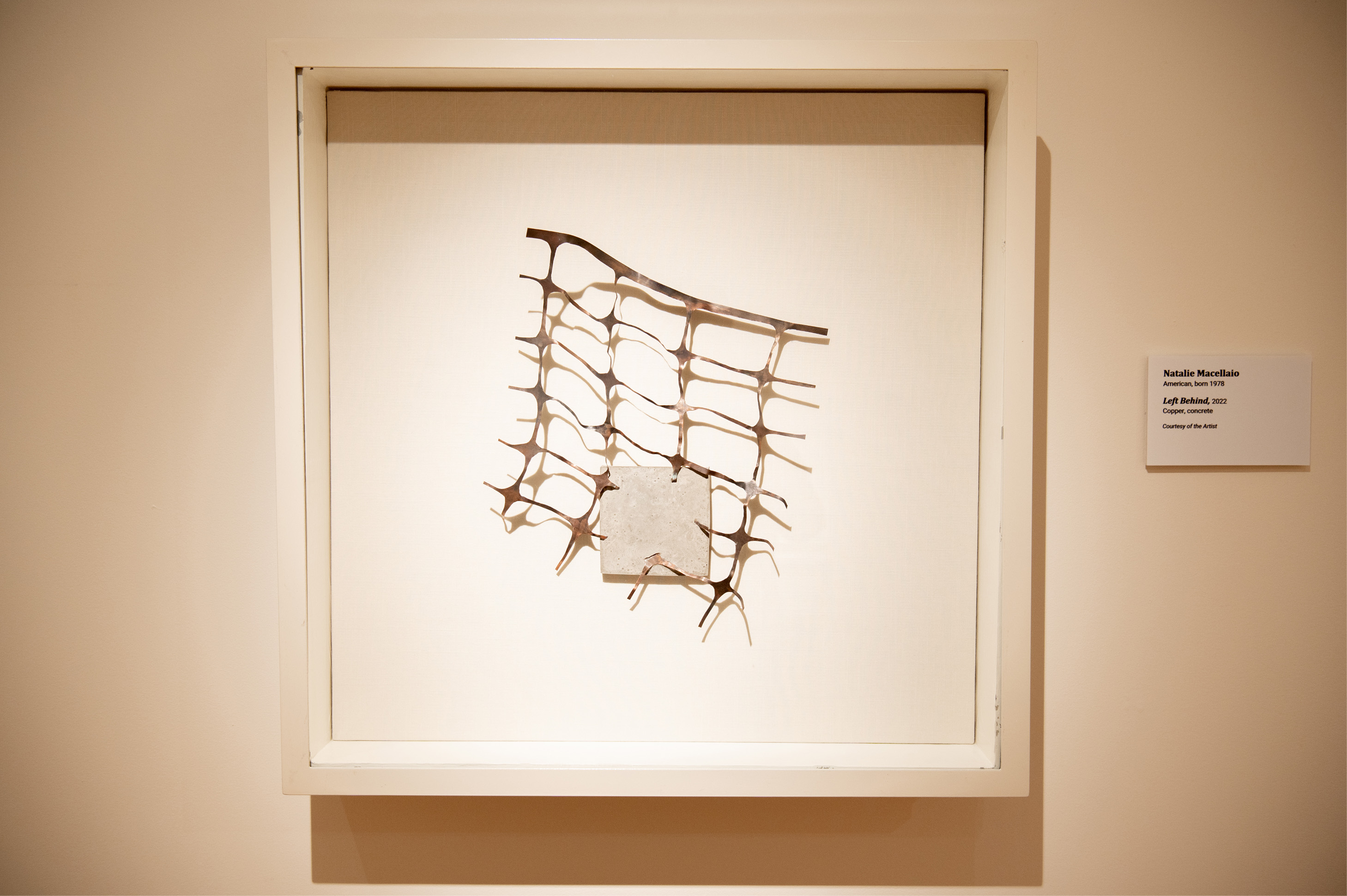
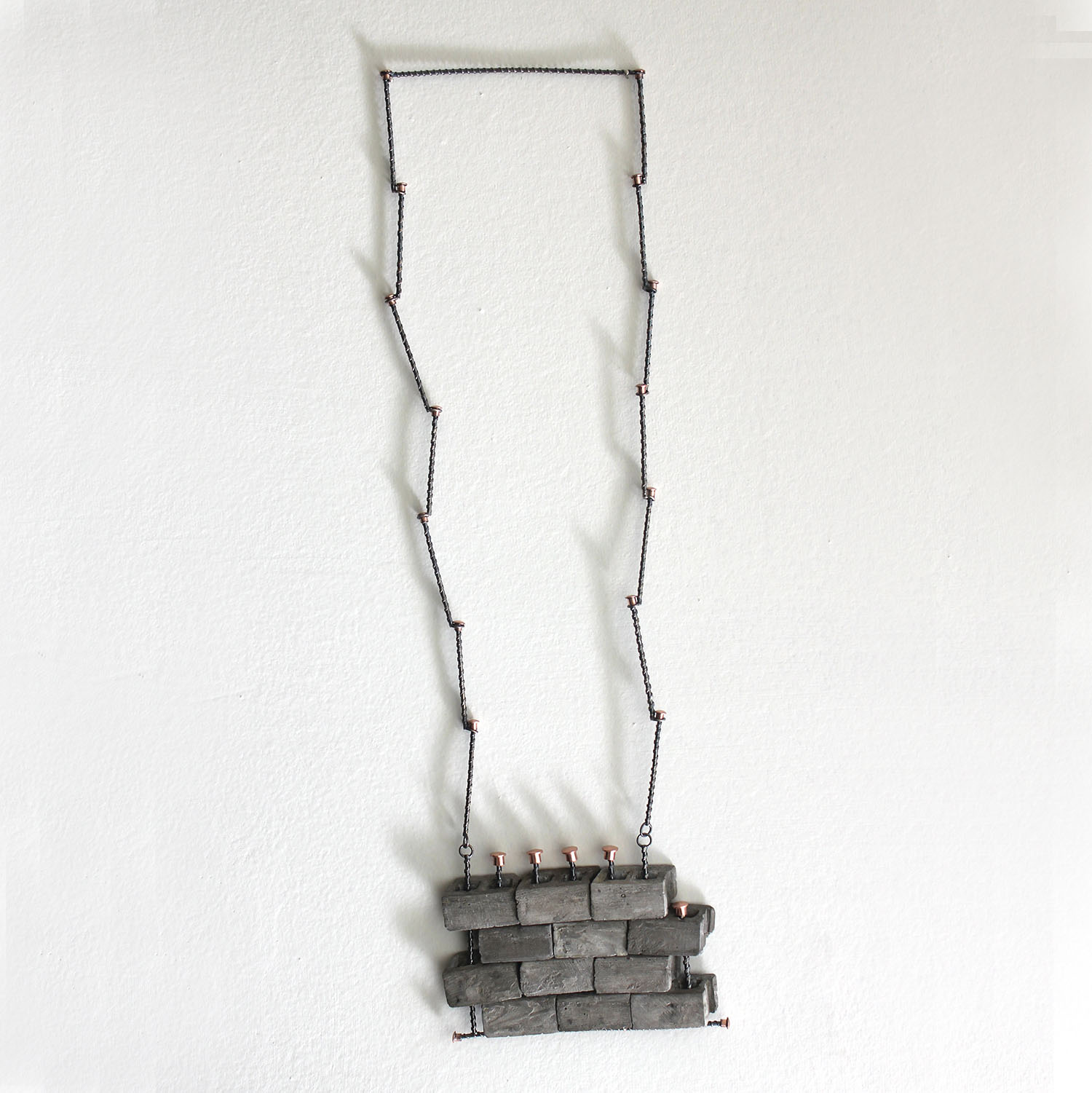
The temporary boundaries and internal structures that make these massive highways and bridges are prominent in our visual landscape while the construction is happening and just as quickly as they appear, they are gone. The discarded fences and hidden grids draw on my need for order around the chaos. I use this imagery to reconstruct jewelry, sculpture and 2D works of art. I change the perspective, scale and materials of these massive structures in order to make them my own through the processes of printmaking, 3D printing, casting, laser cutting and traditional fabrication techniques.
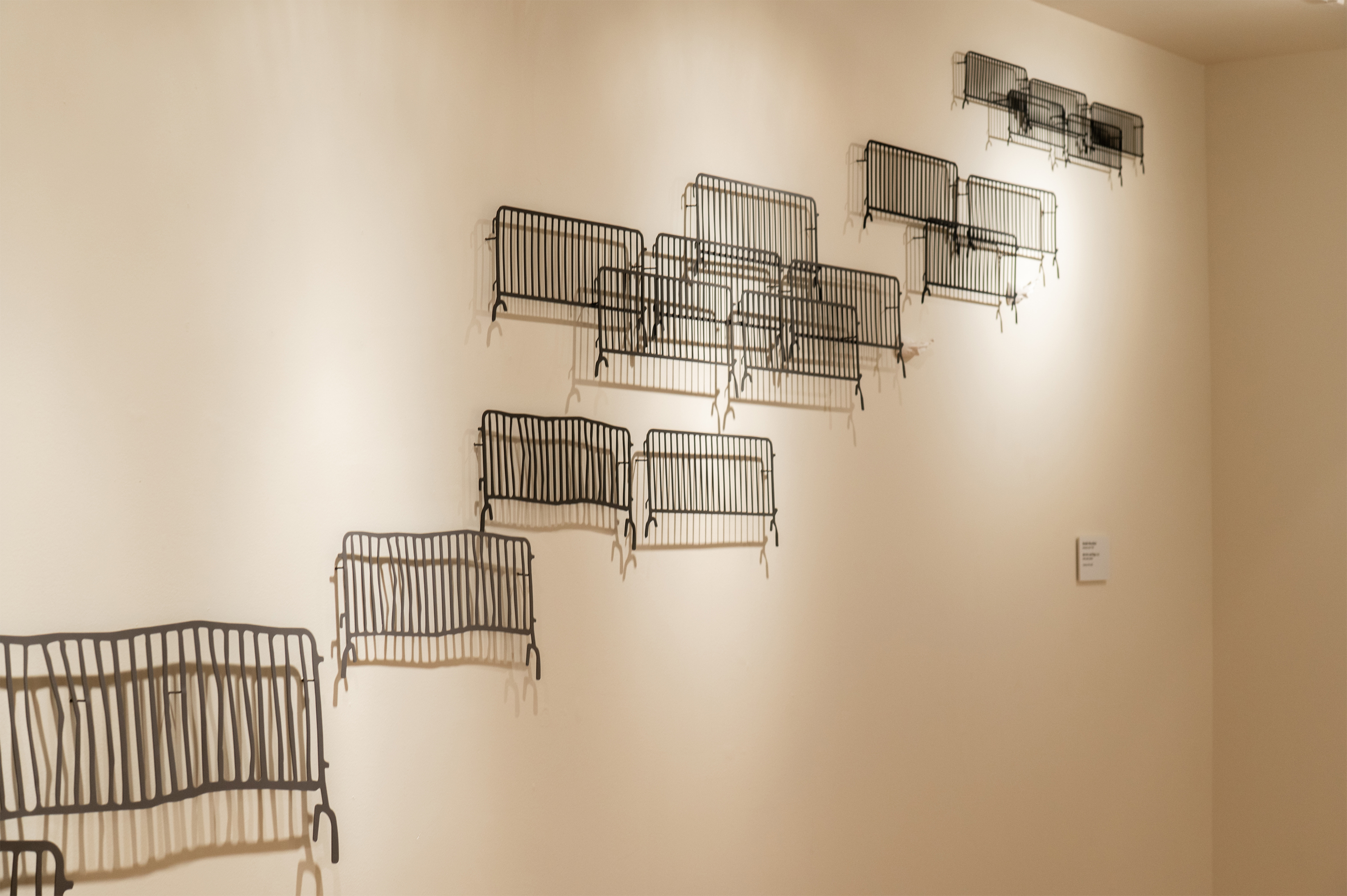
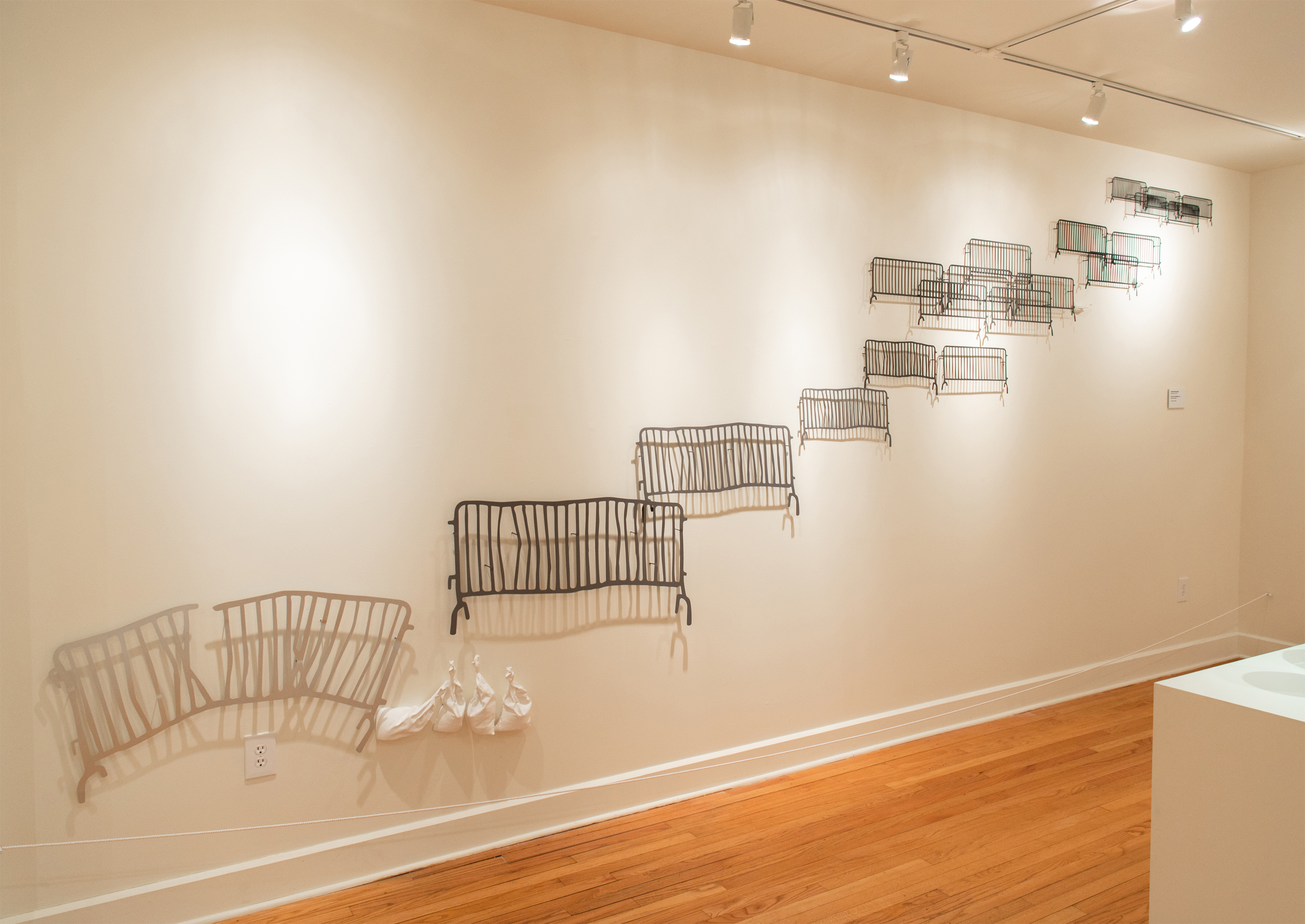
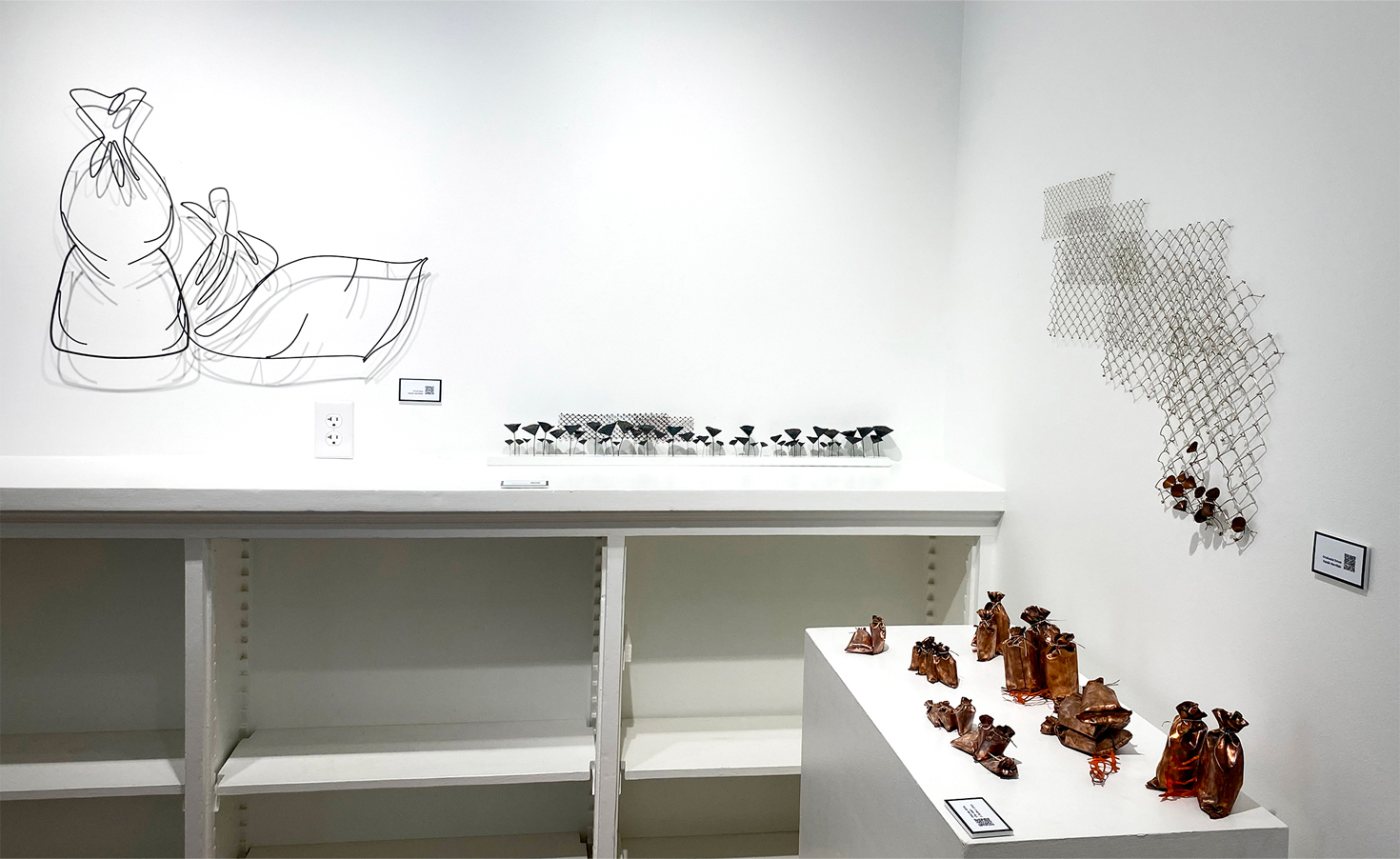
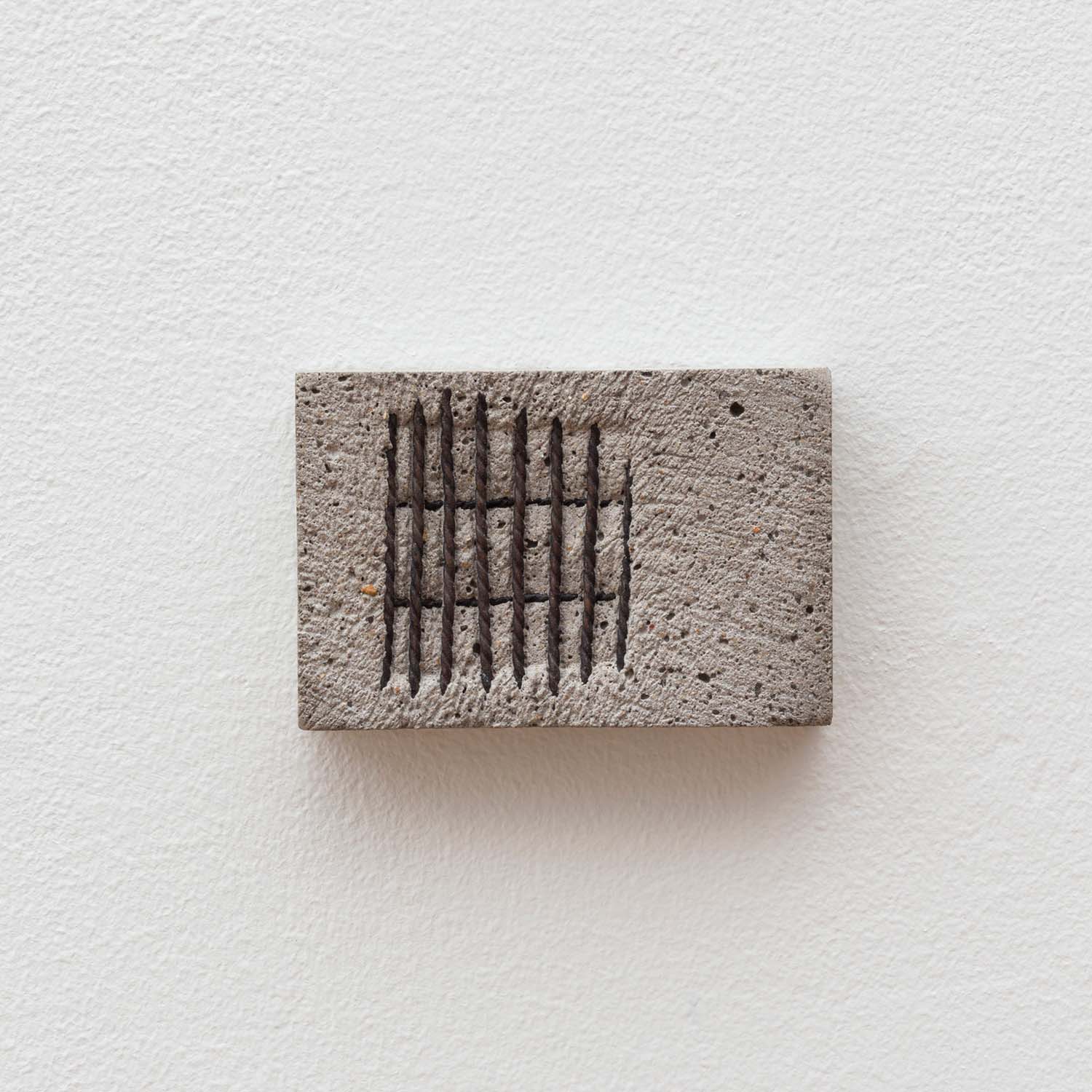
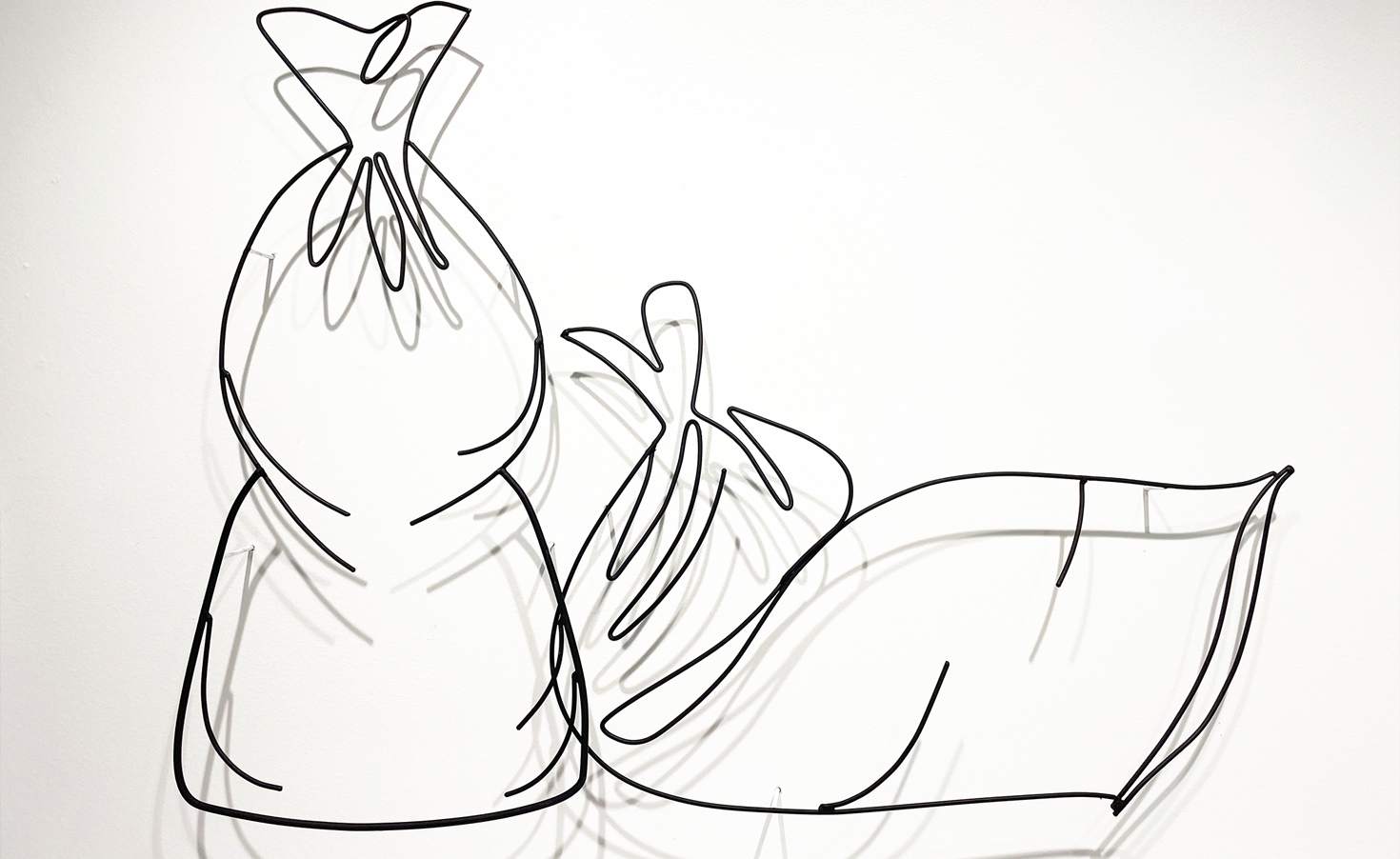
In Overlooked, I turn my attention to the mundane, the peripheral, and the ignored elements of our built environment-materials and forms so ubiquitous they often escape notice. From construction barriers to sandbags, I reimagines the visual language of infrastructure through meticulous, labor-intensive craft processes that challenge our perceptions of utility, value, and visibility. I draw from the transitional chaos of construction sites, translating temporary safety structures into wearable forms and sculptural installations. My hand-fabricated jewelry and wall pieces highlight the material poetics of chain-link fences, signposts, and rebar-objects that exist on the margins of daily experience. My work recasts the overlooked into objects of contemplation, curiosity, and critique, reminding us that the invisible infrastructure of modern life is anything but neutral.
Natalie Macellaio's "Texas Sculpts" exhibit of work looks into the construction and deconstruction of her environment. She is drawn to the repetition, scale and materials that are used to reshape the landscape with highways, buildings and bridges. She is particularly interested in the construction of our infrastructure, which allows us to move more quickly from one place to the next in greater distances and in greater numbers. The temporary boundaries and internal structures that make these massive highways and bridges are prominent in our visual landscape while the construction is happening and just as quickly as they appear, they are gone. The discarded fences and hidden grids draw on her need for order around the chaos. She uses this imagery to reconstruct jewelry, sculpture and 2D works of art. She changes the perspective, scale and materials of these massive structures in order to make them her own through the processes of printmaking, 3D printing, casting, laser cutting and traditional fabrication techniques.
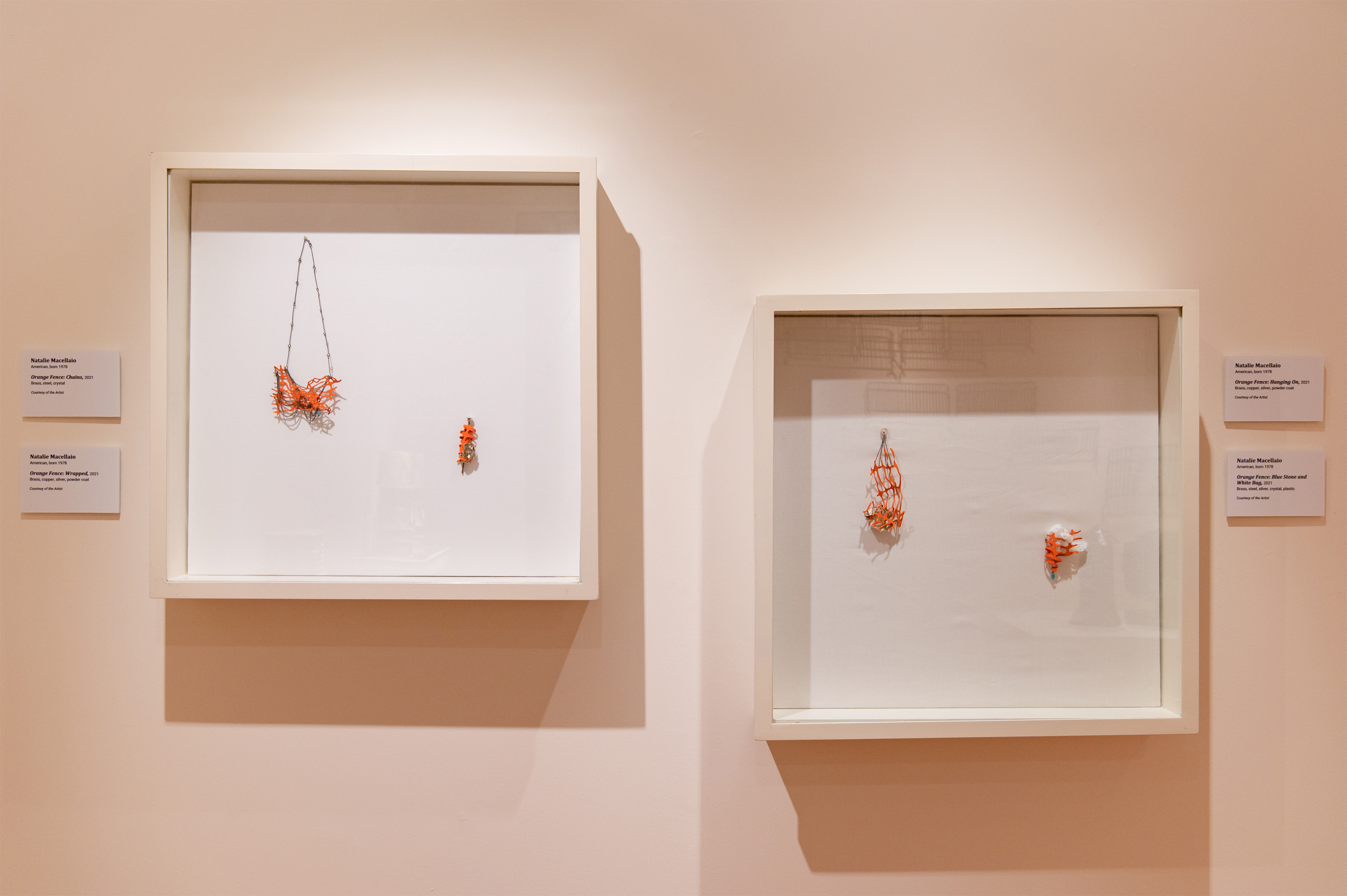
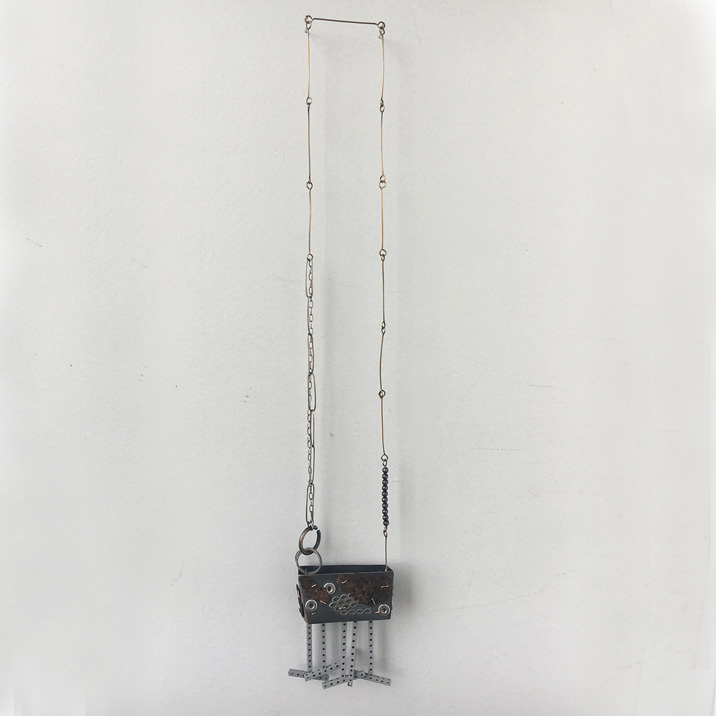
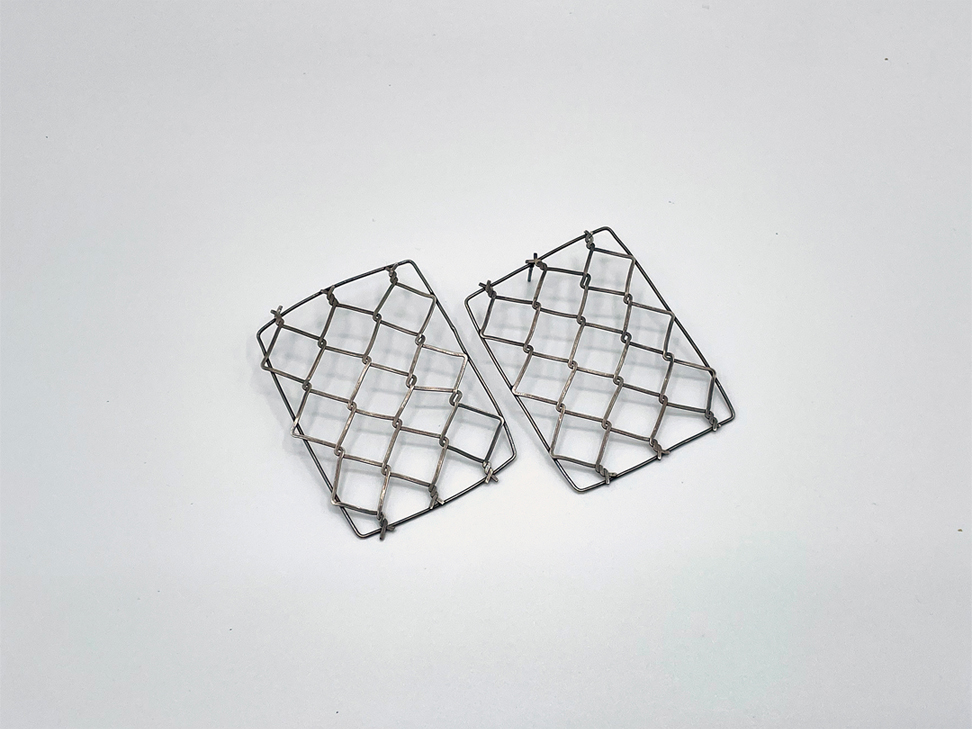
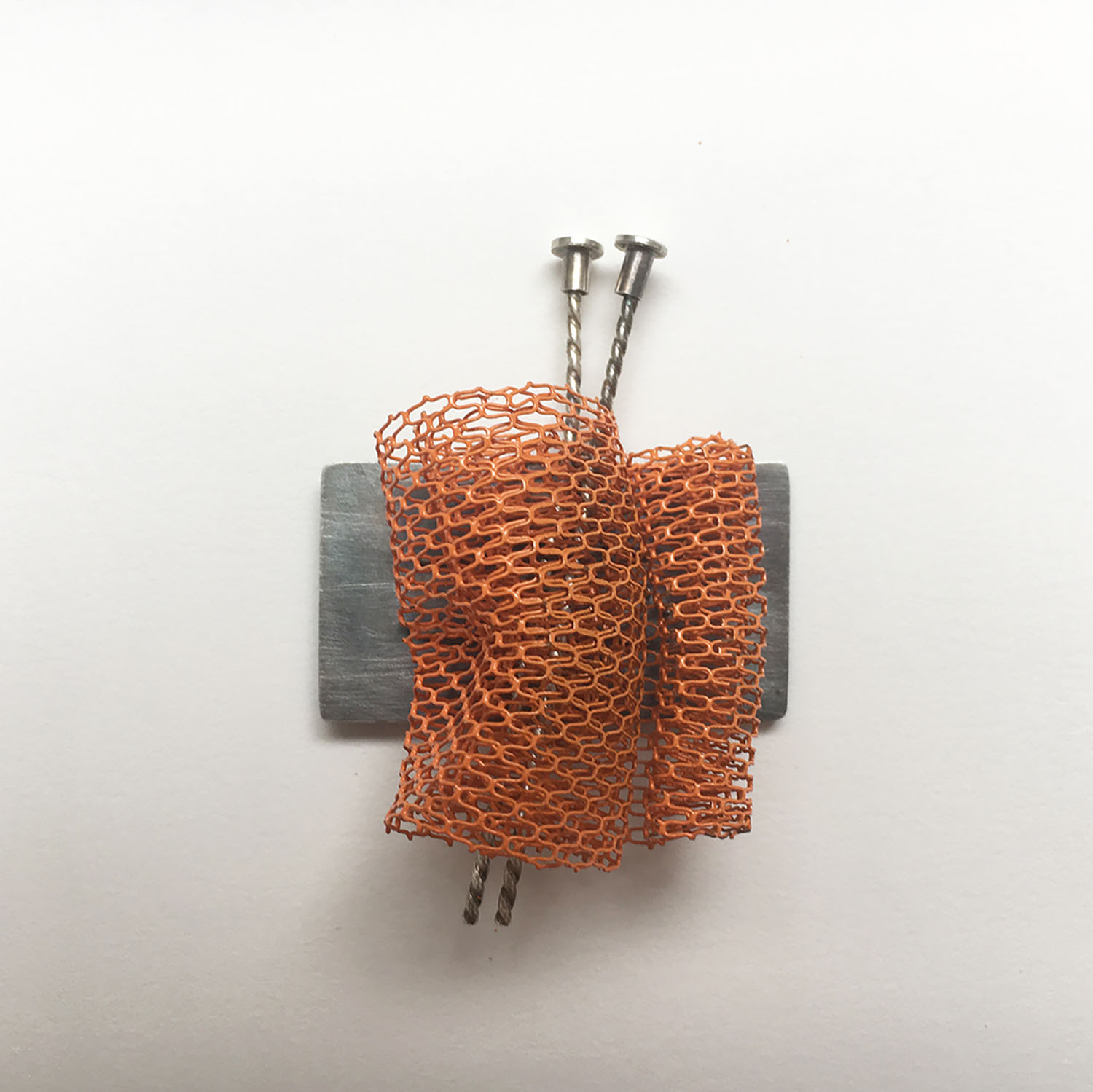
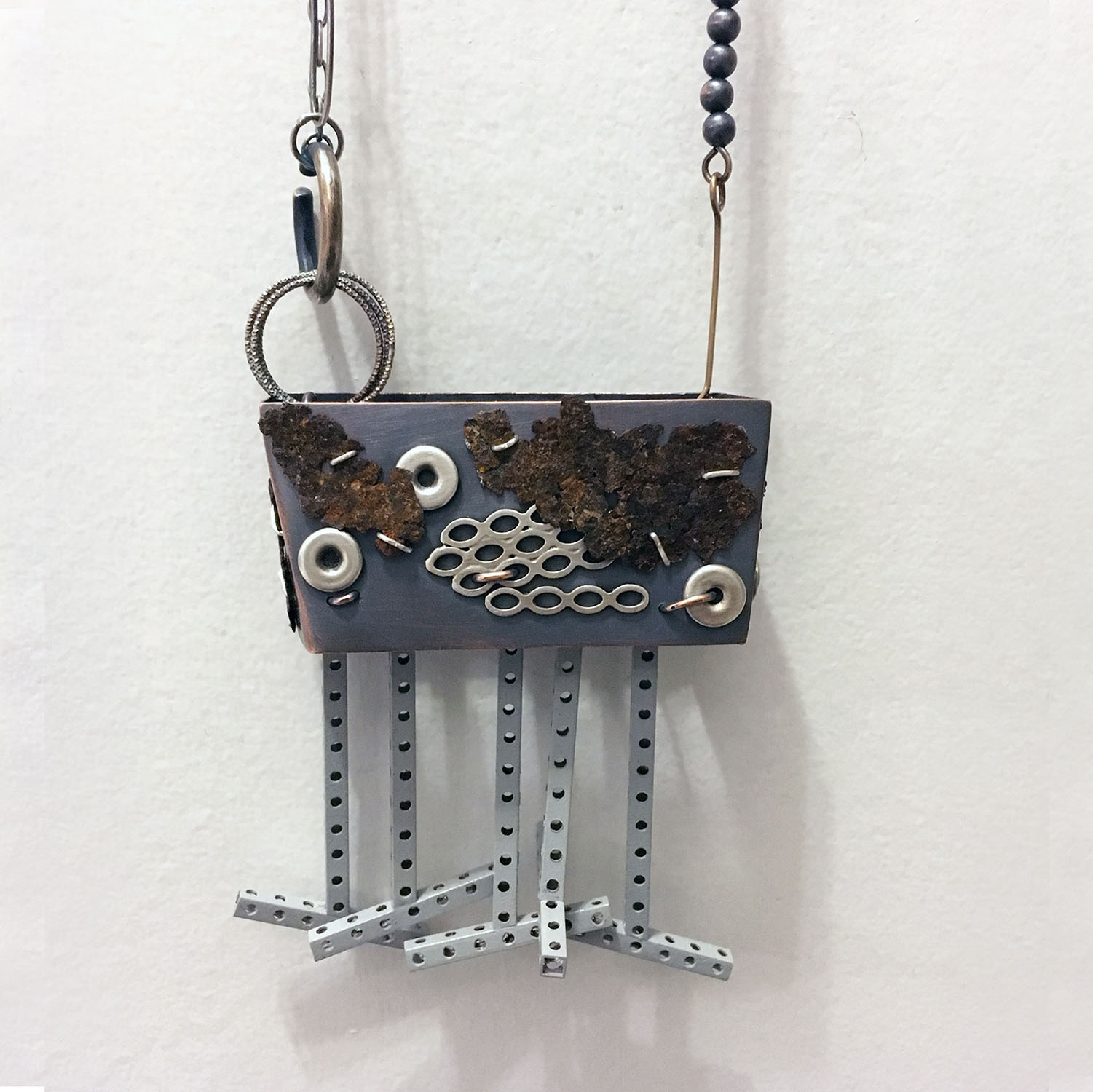
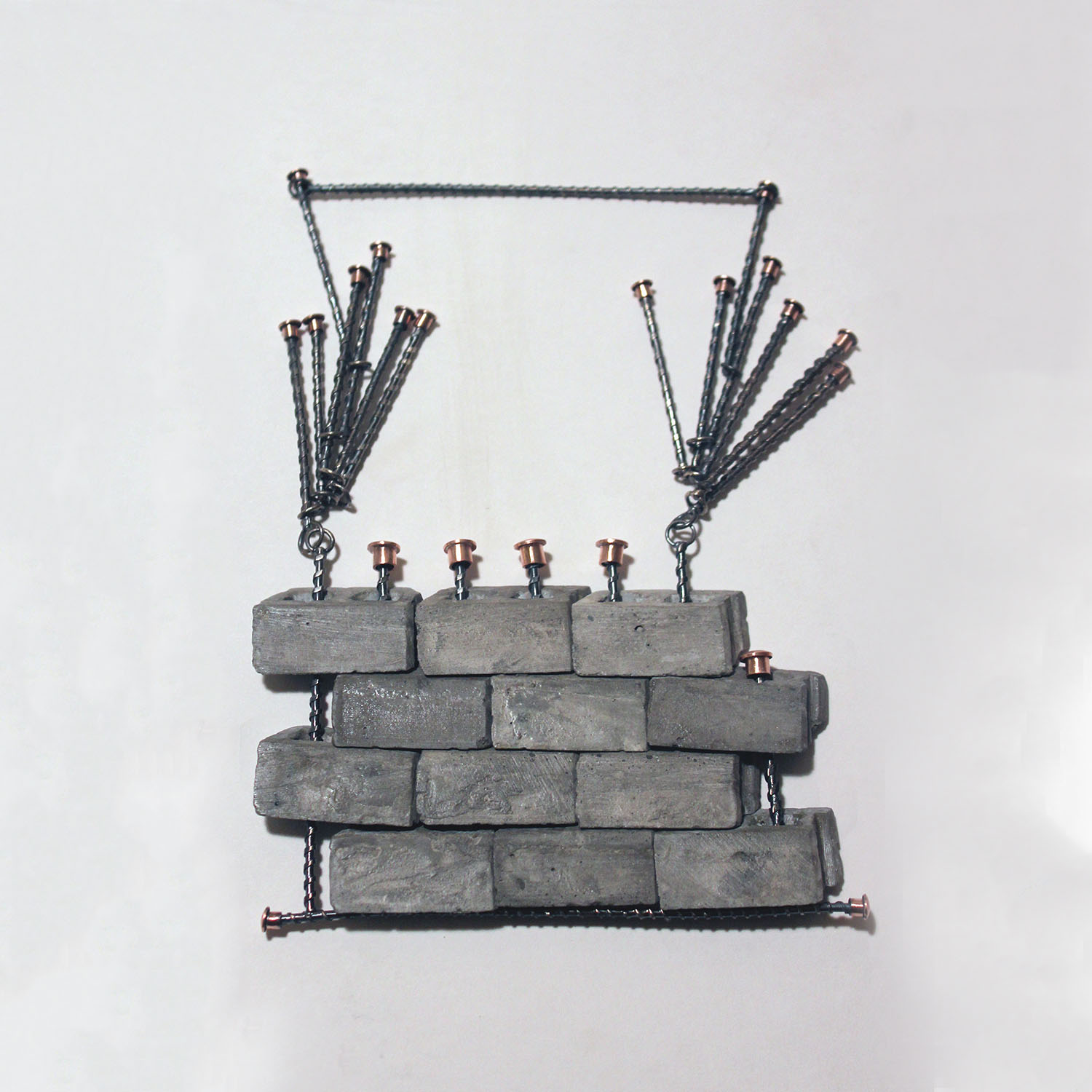
This body of work is a reflection of the urban landscape I live in. The constant destruction and reconstruction of the physical world has made seeing safety fences, cinder blocks, and rebar grids common place but always from the seat of a car. I rescale and change the perspective of these objects to reframe their context, turning a 1 ton construction wall into a brooch, an orange safety fence into a wall sculpture, a 40 foot rebar and concrete trestle into fine jewelry. Silver, copper, concrete and steel are implemented to create these intimate and detailed structures.
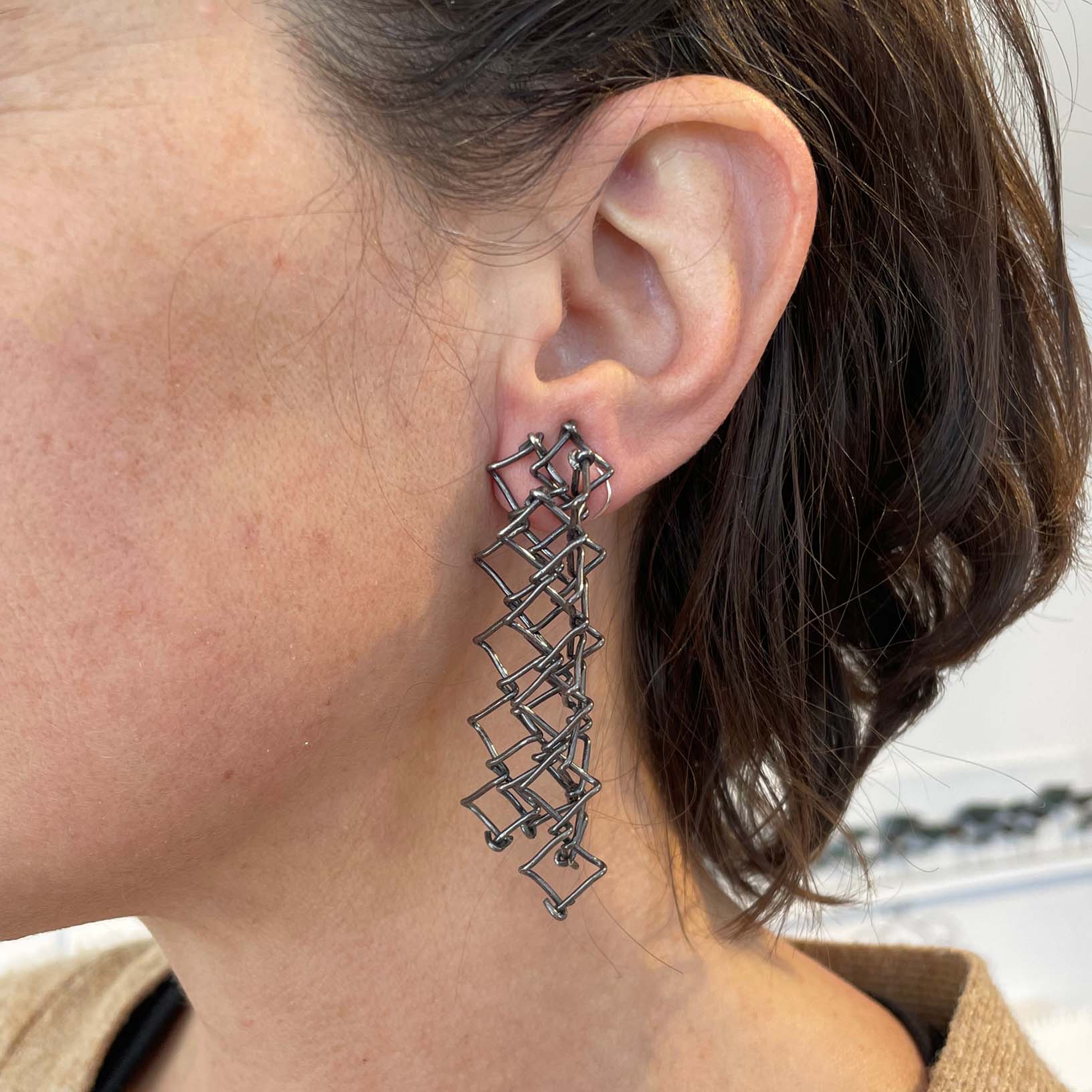
Construction sites fascinate me. I try to remember what once was there while also trying to guess what will come. The bright colors of the caution signs, sand bags and safety fences are put up to grab our attention, warn us of change. It’s hectic, slow, and messy. Once it is done, all that is left is the clean and perfect space, bending in with the rest of the environment. With this construction jewelry, I try to capture a small vignette to remember the temporary chaos before order sets back in.
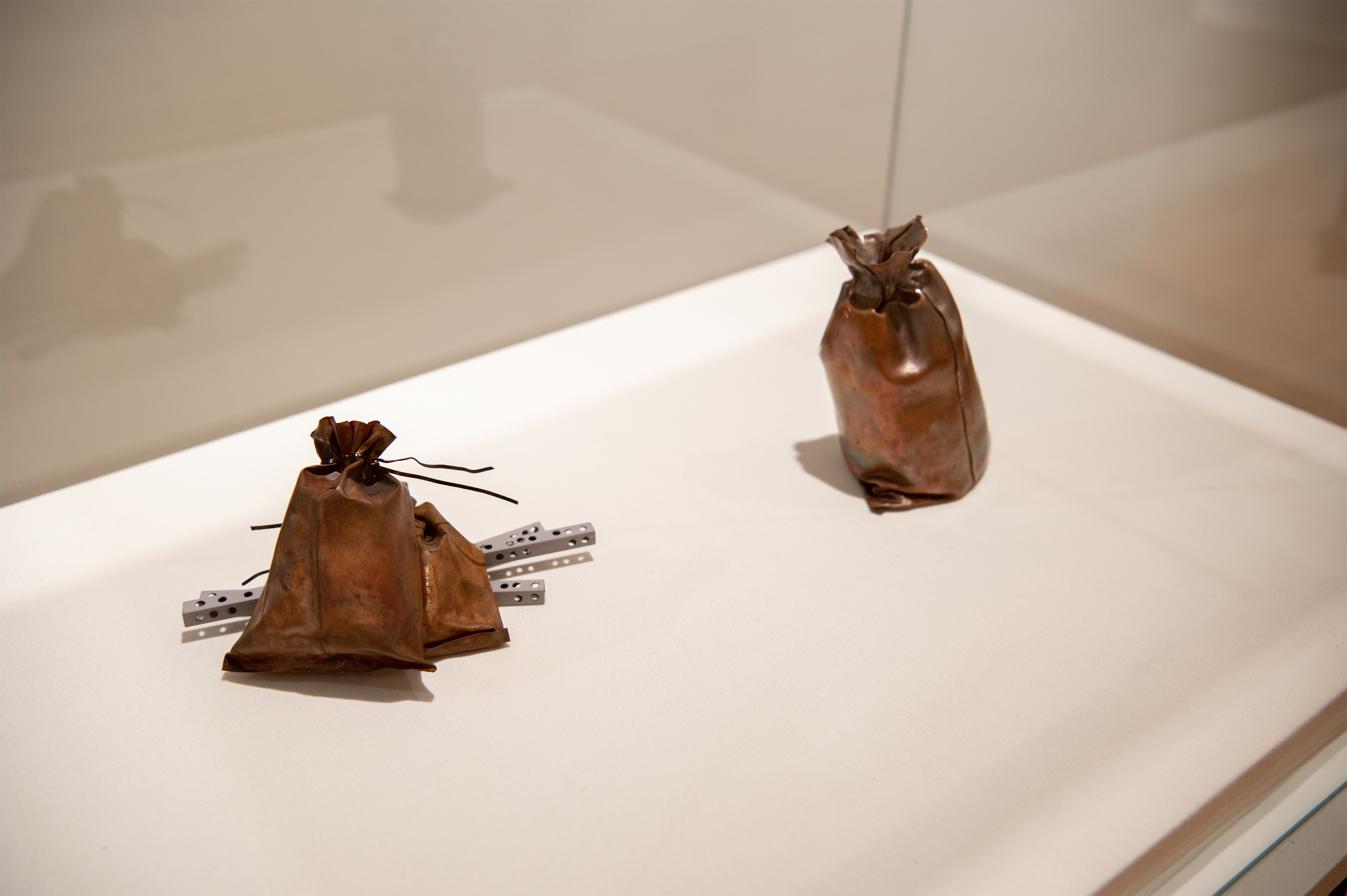
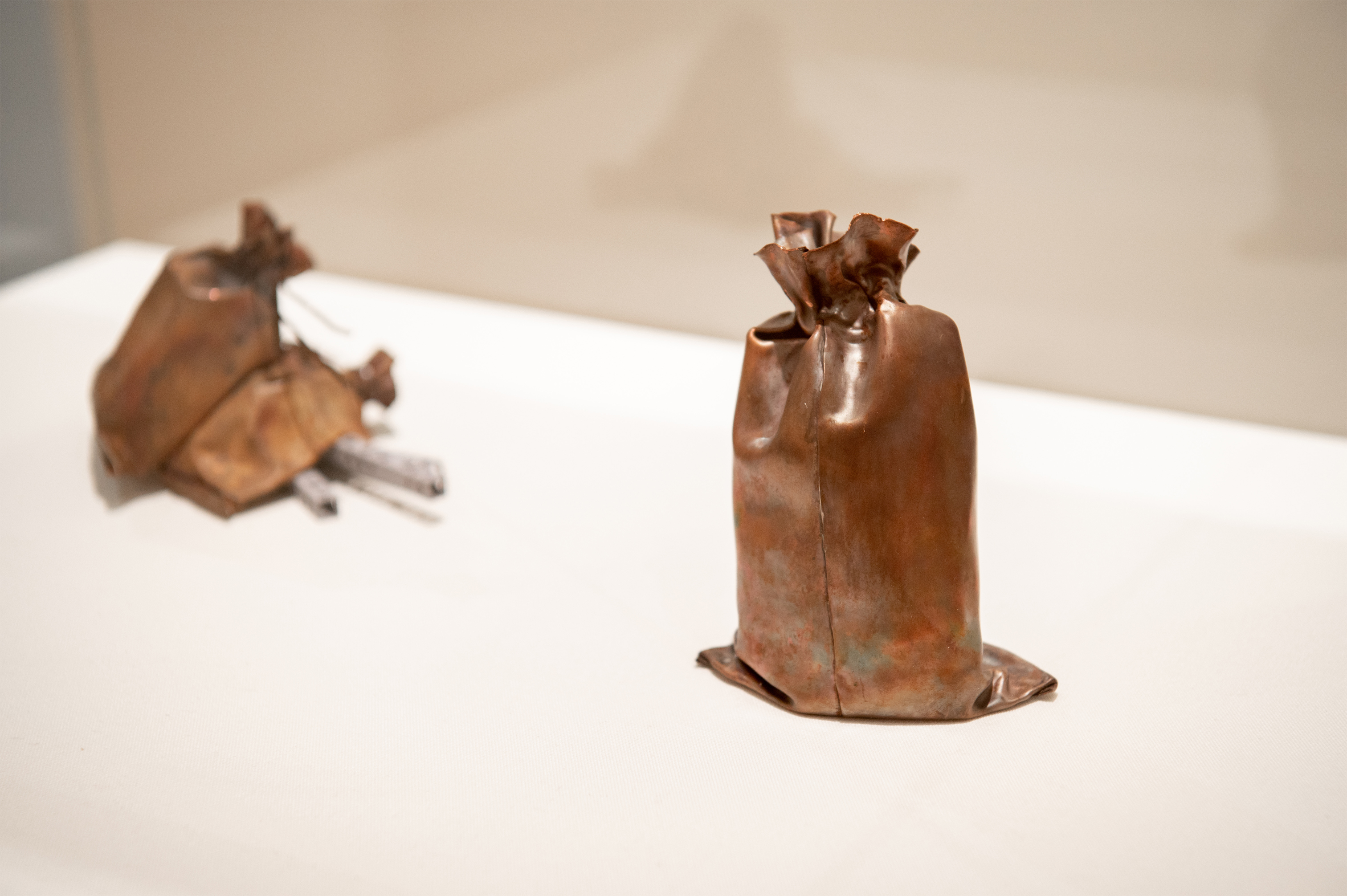
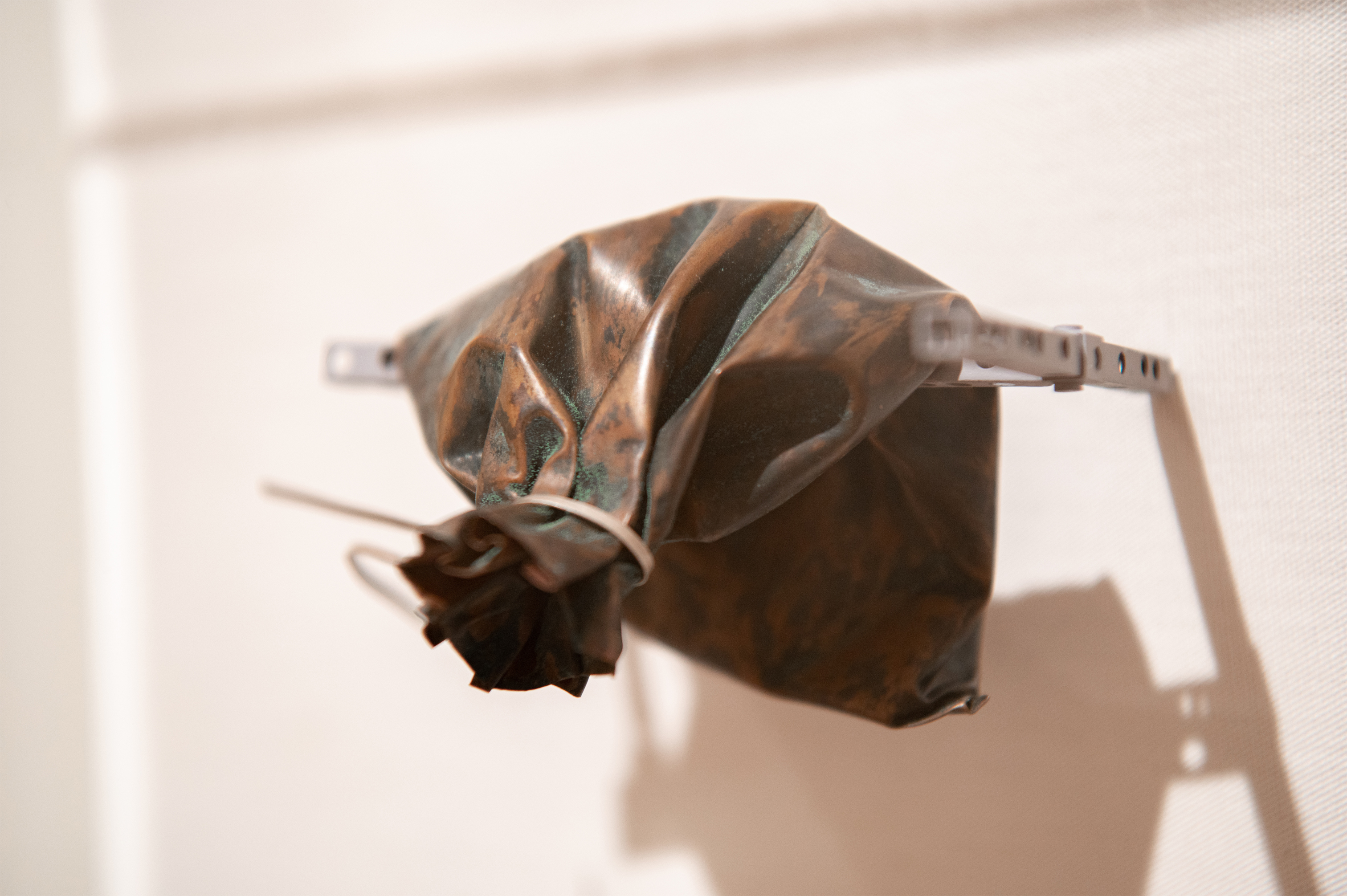
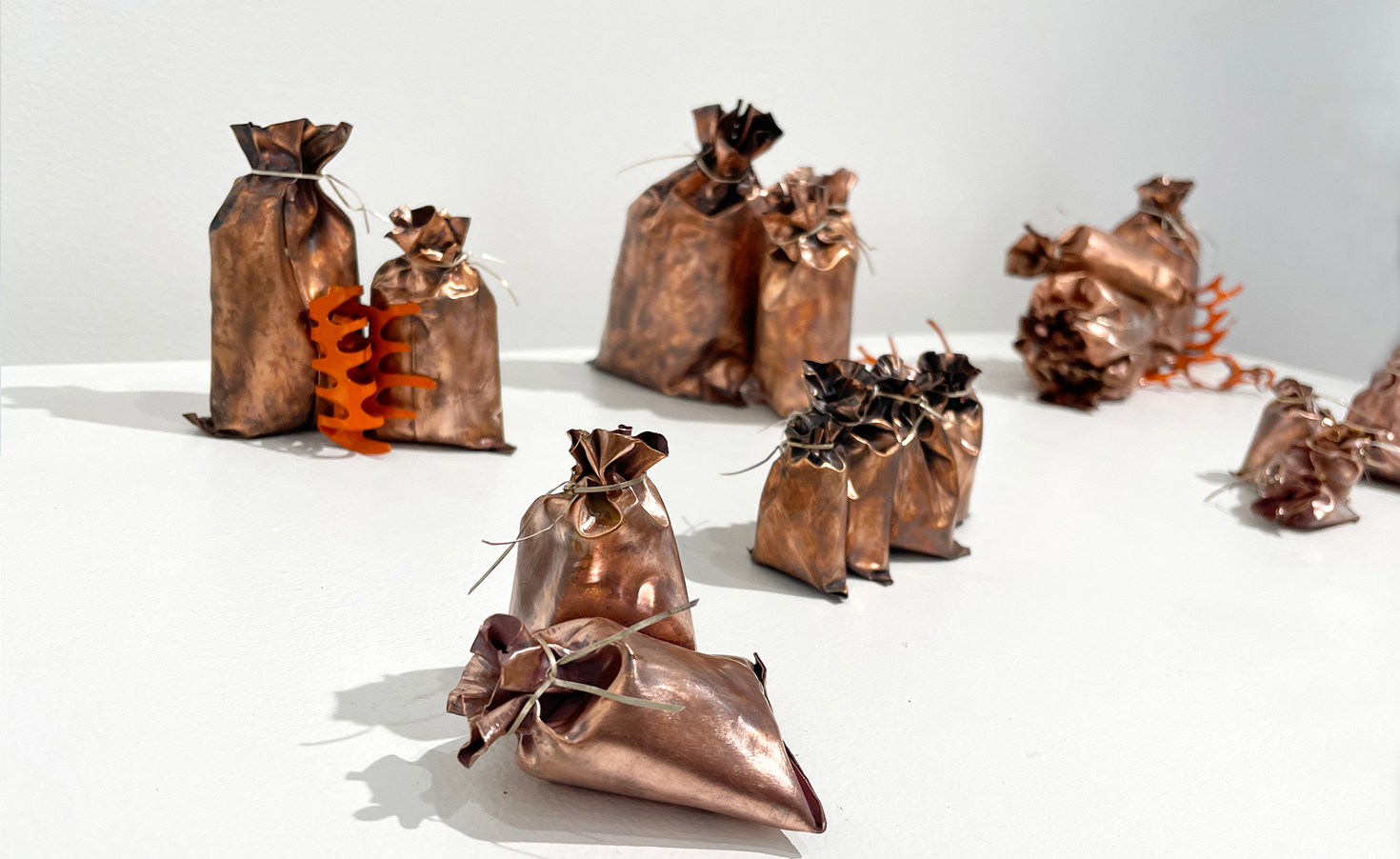
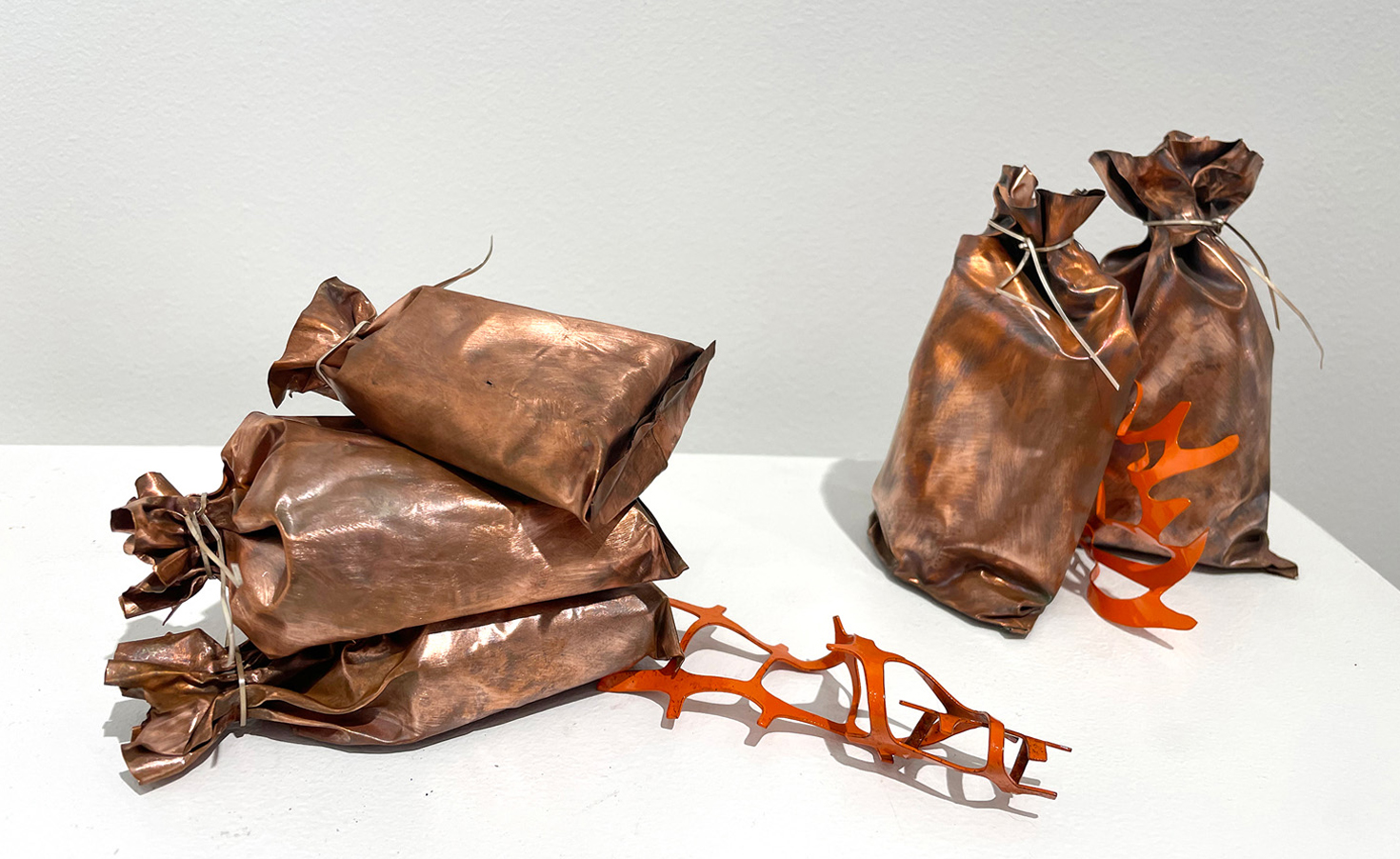
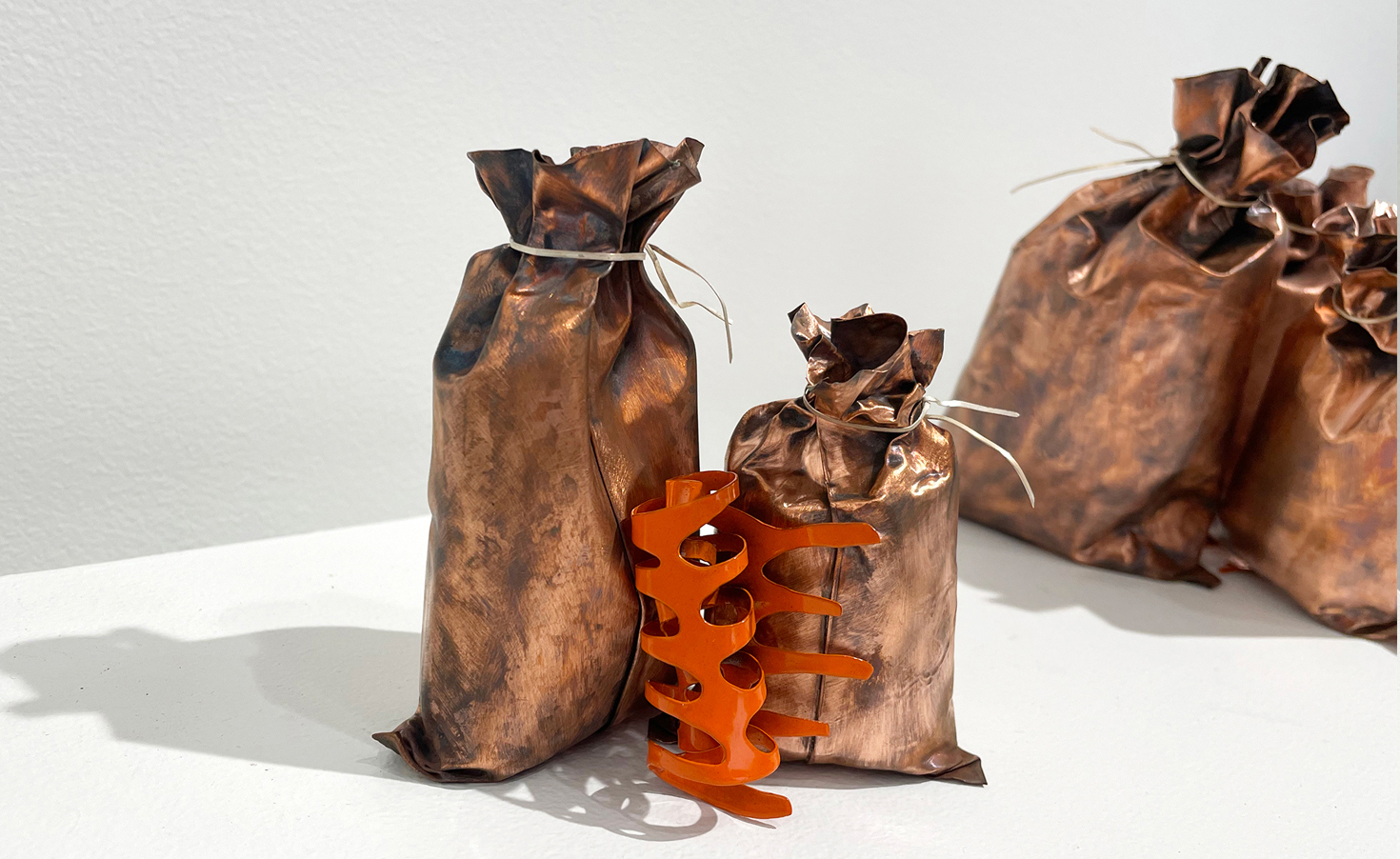
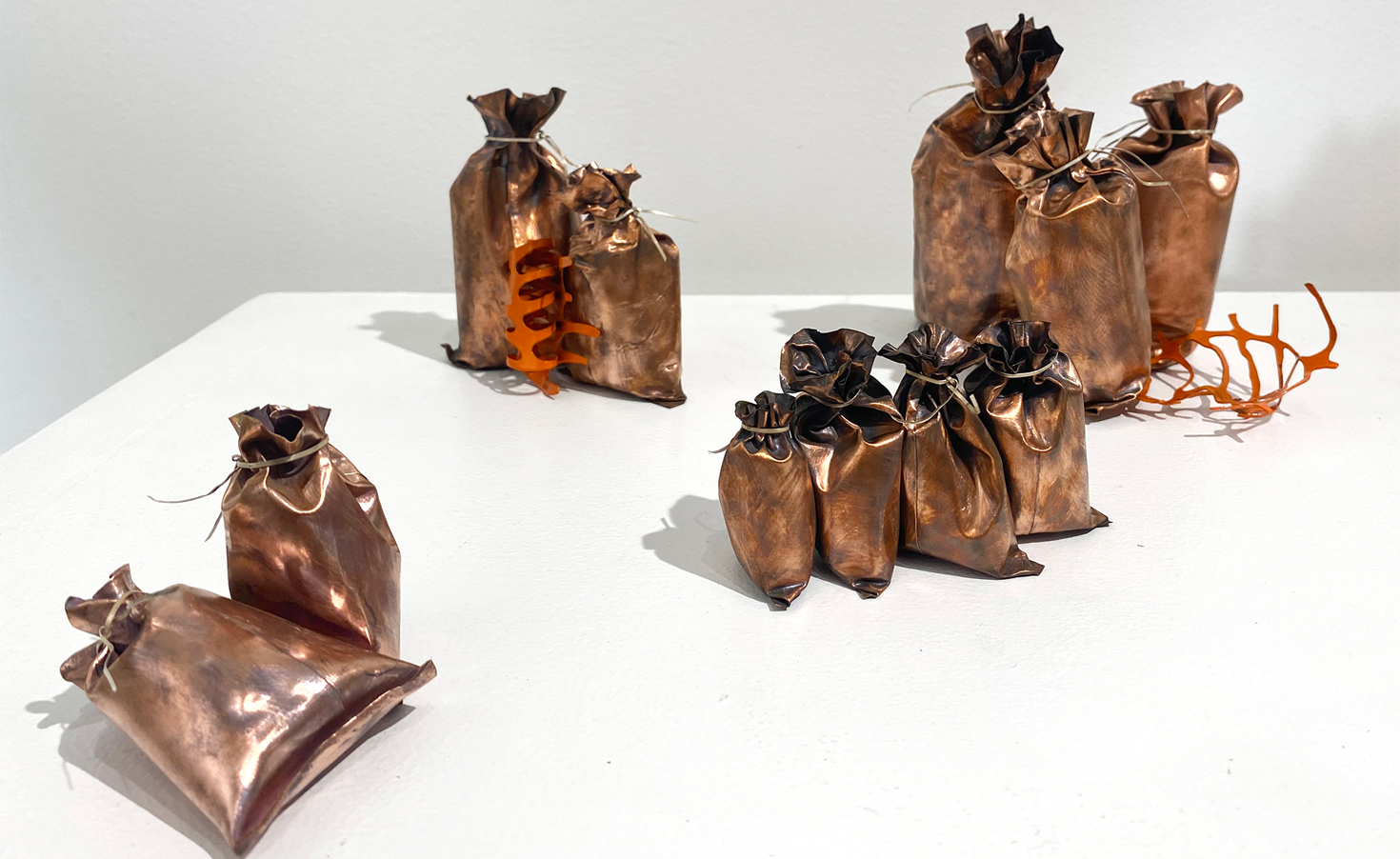
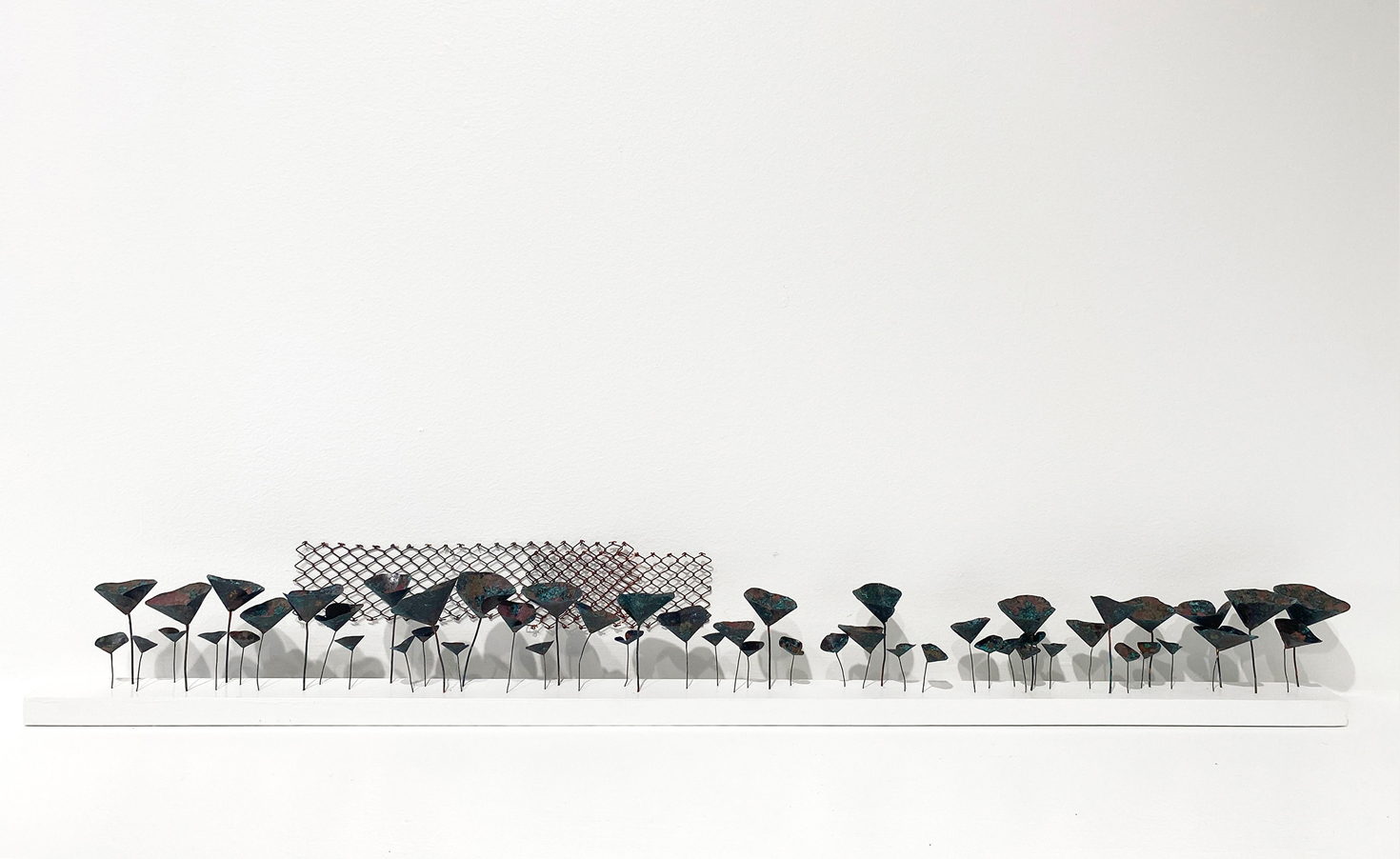
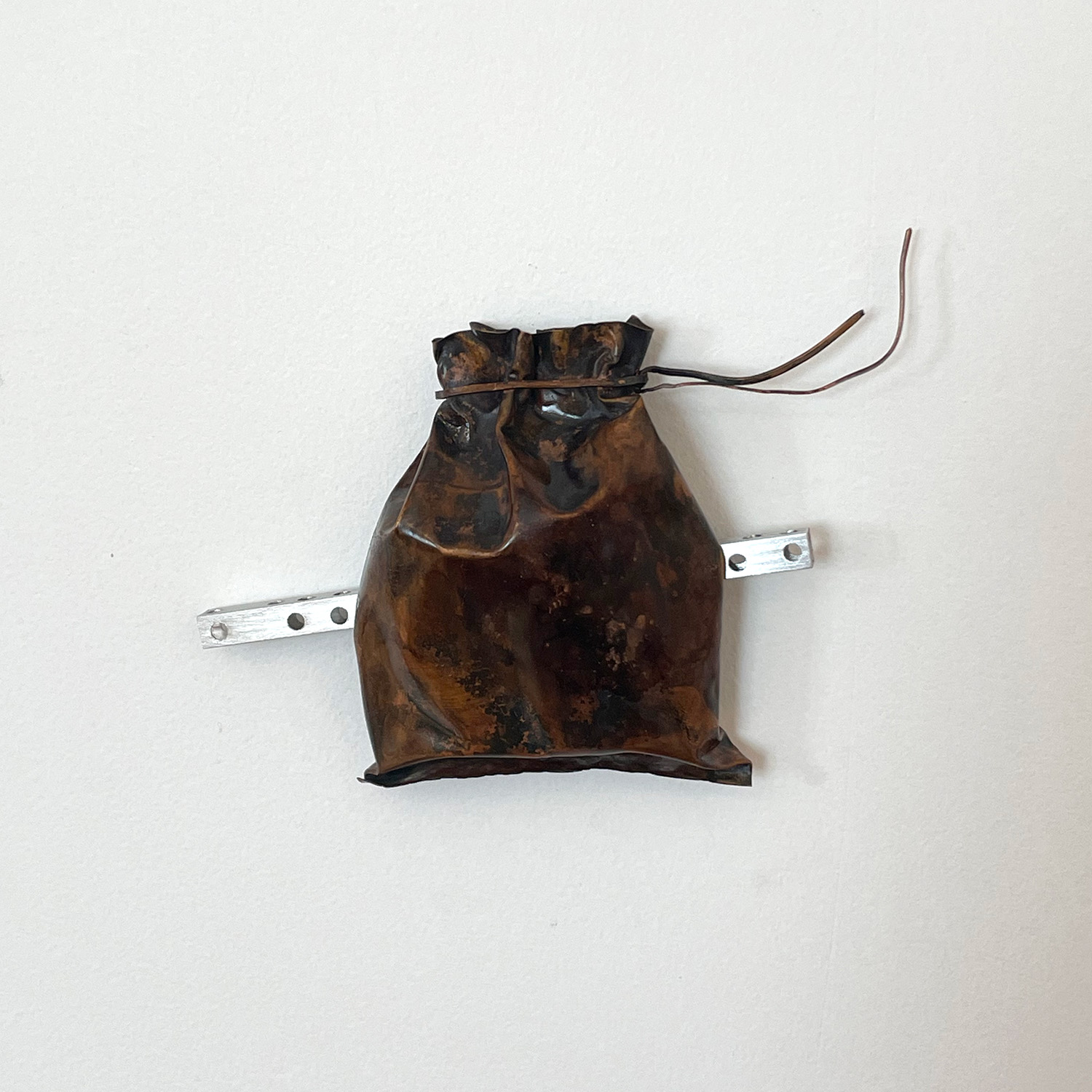
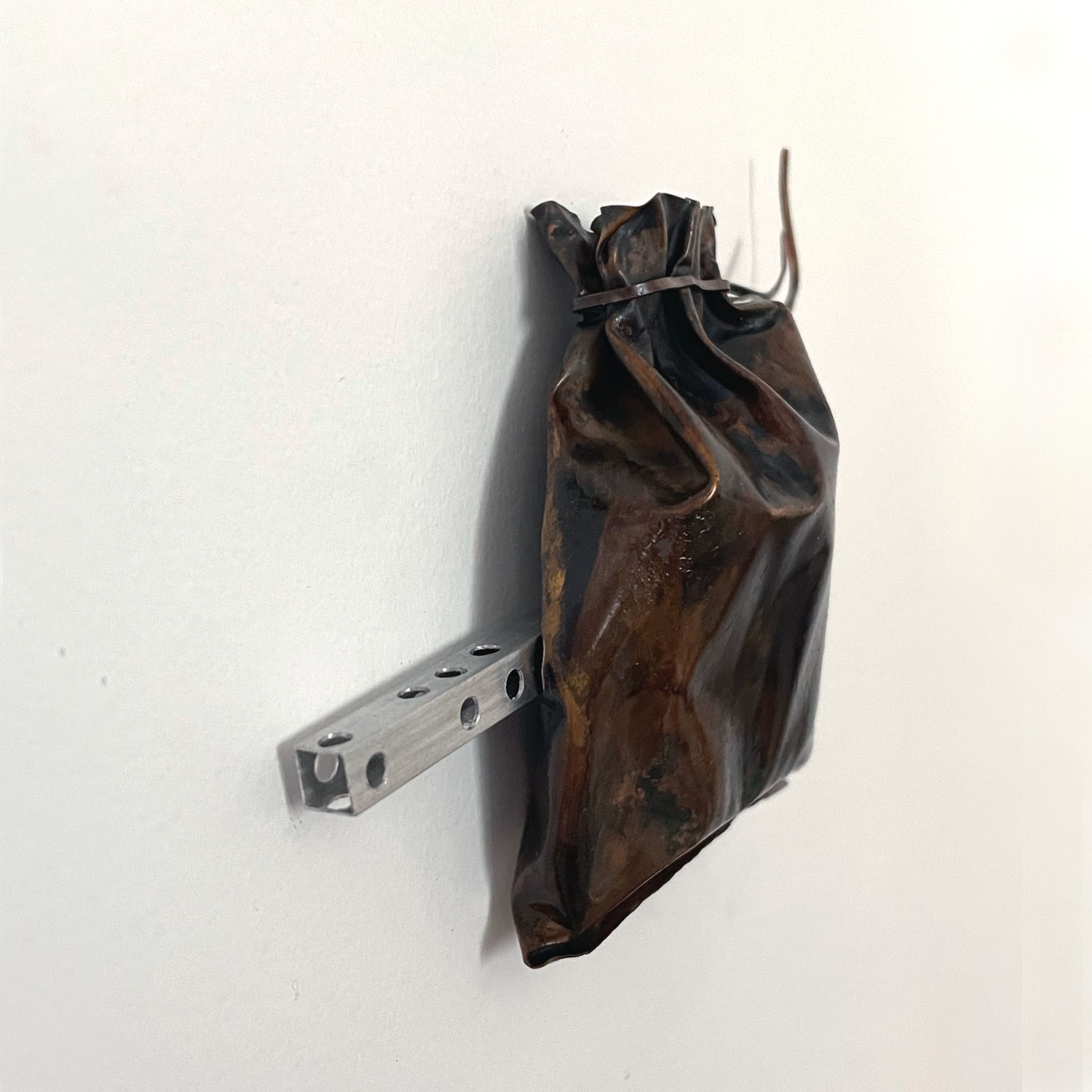
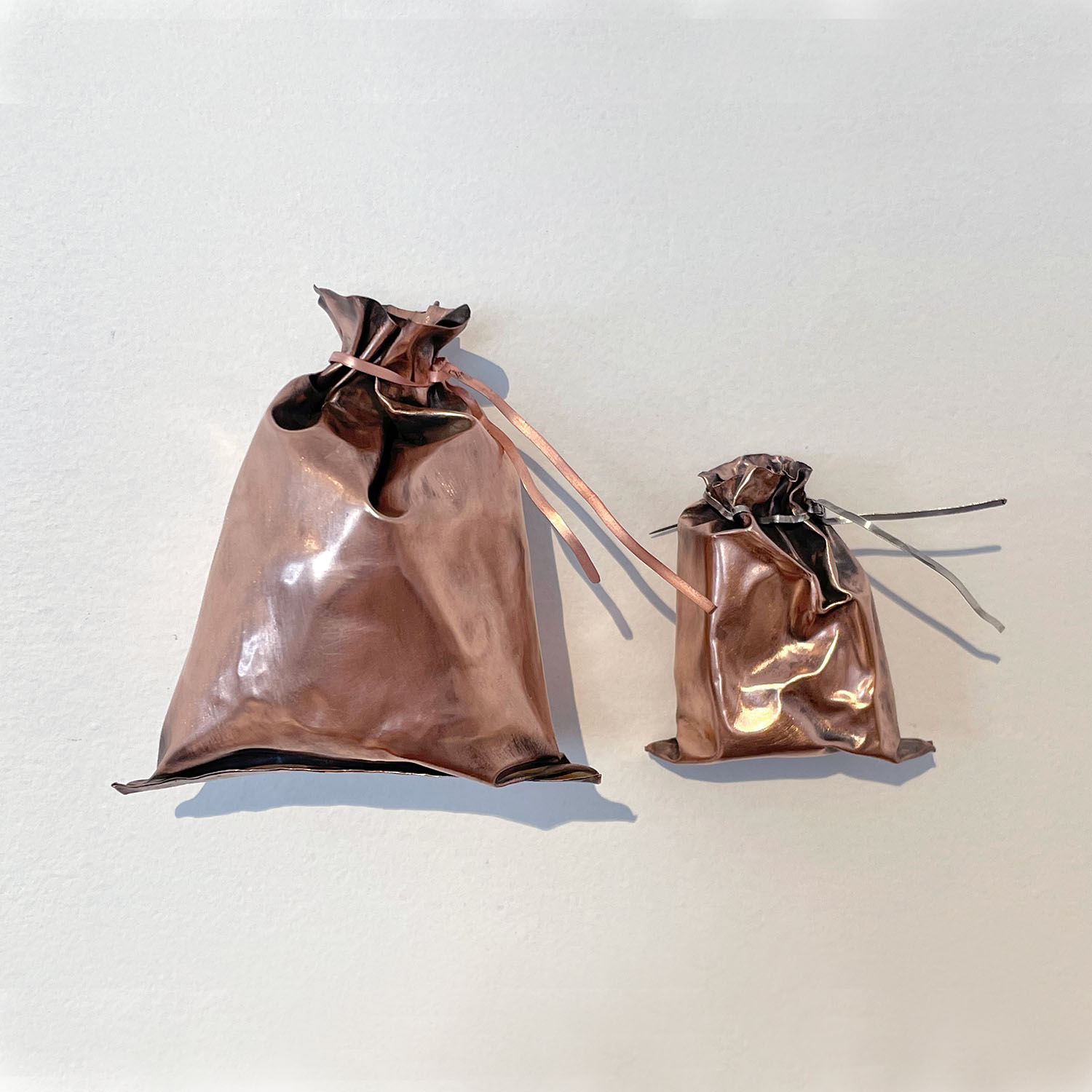
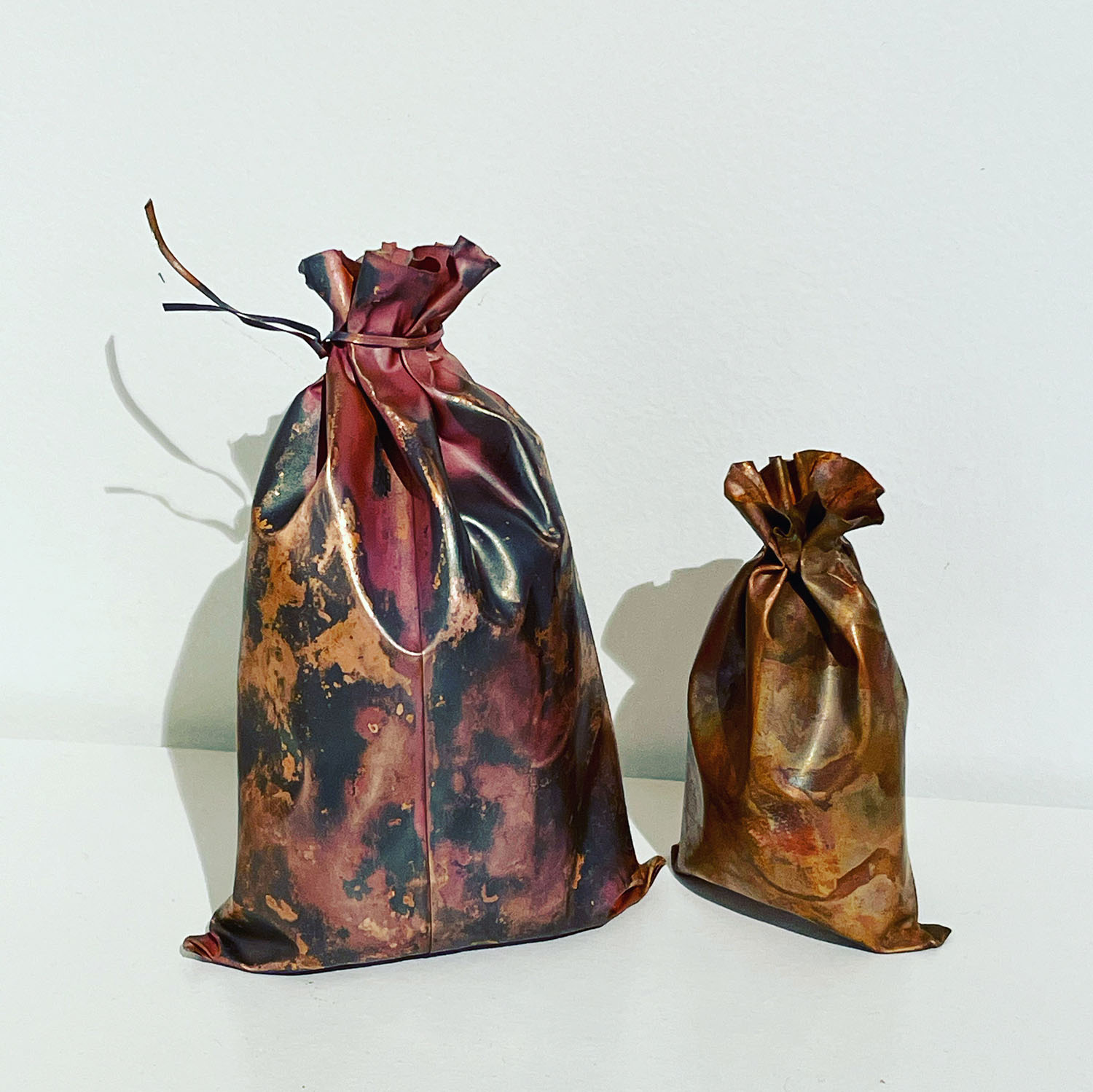
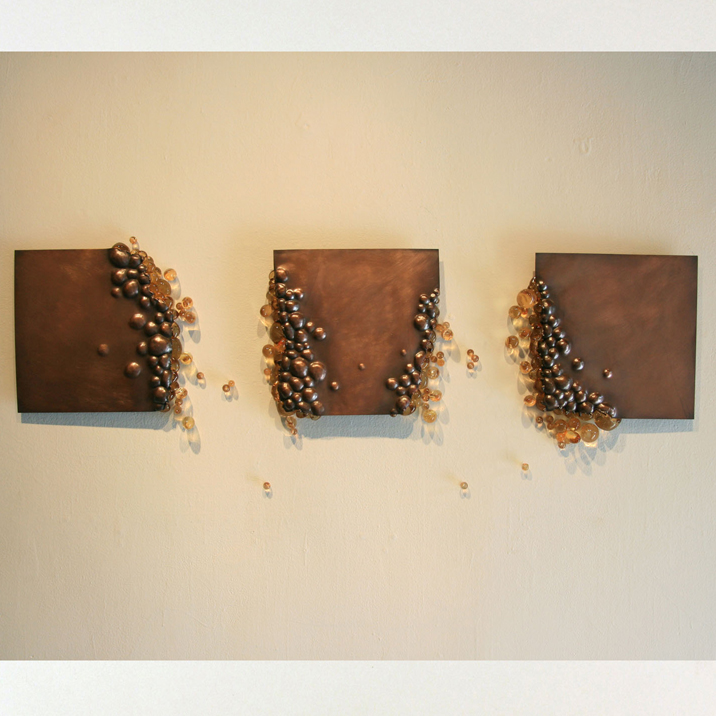
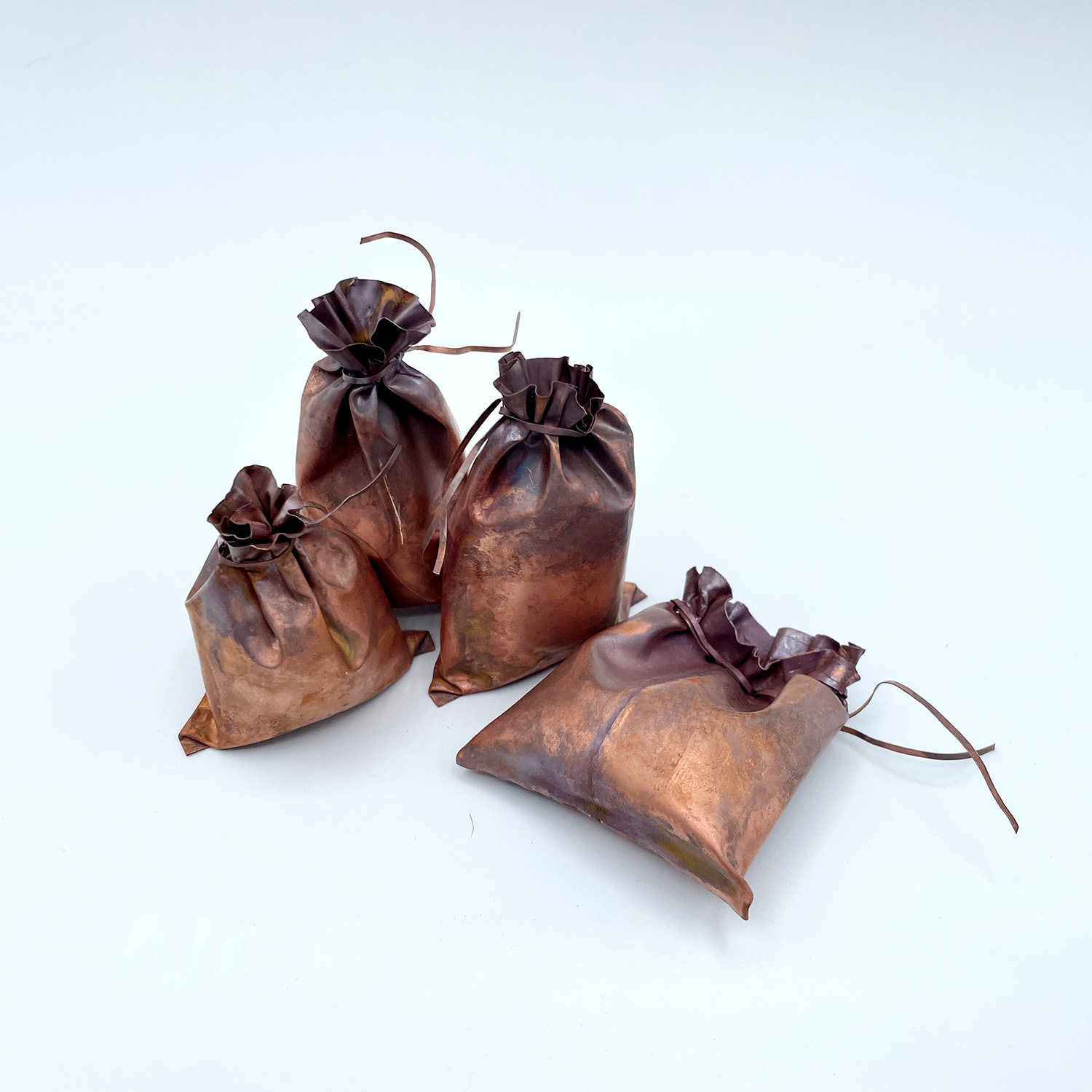
The orange construction sandbags are used to hold down construction signs. Necessary, temporary, seen, then discarded. Their anthropomorphic forms draw me in every time I pass them by. Some bags seem to be holding on with what little sand is still inside, while others are left on the side of the road, still full, but holding down nothing.
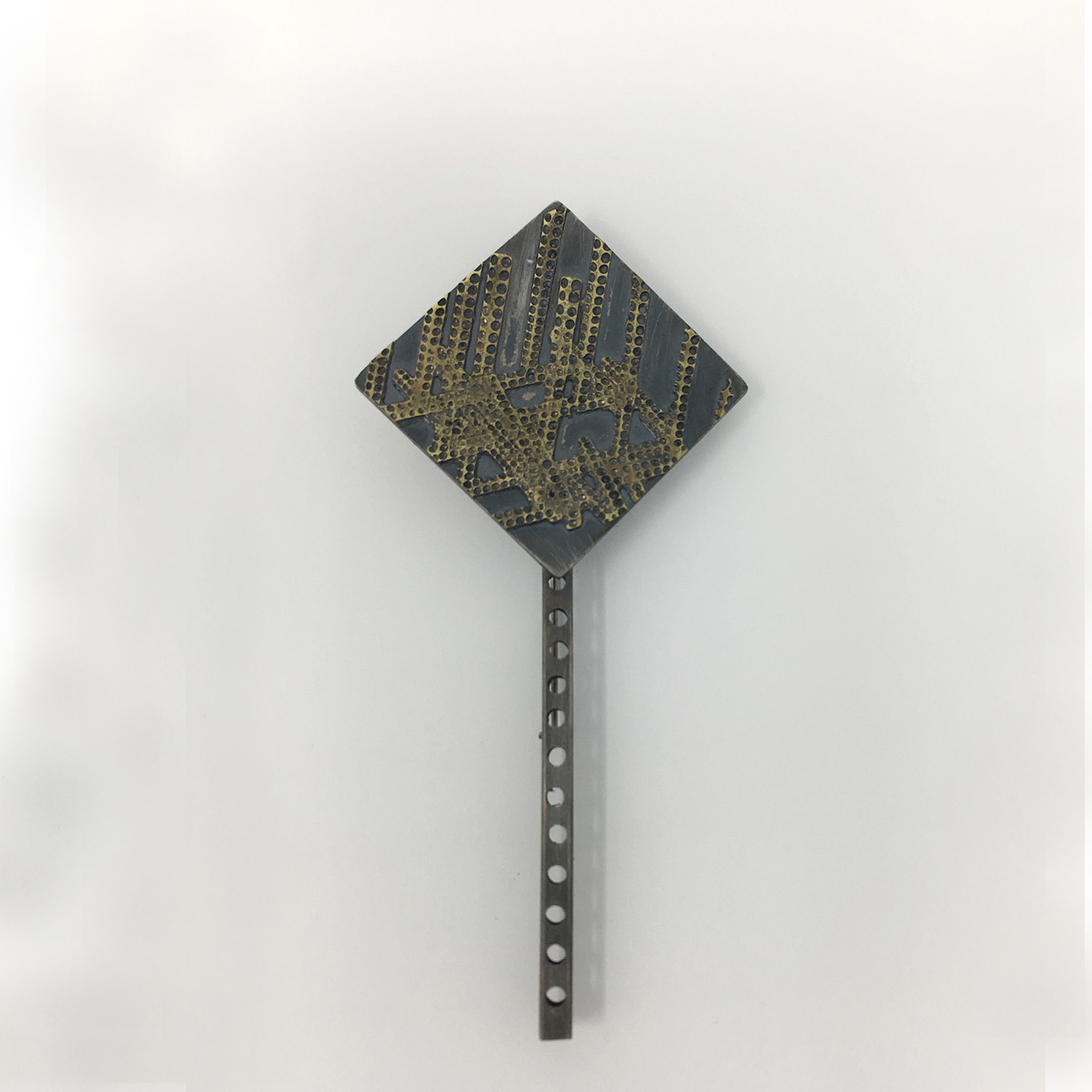
Transforming the bags into copper allows me to see them in a more intimate way, they become stronger, more structural, permanent, but useless. These hollow bags are shells of what they represent, and rather than have a function they are focused on form.
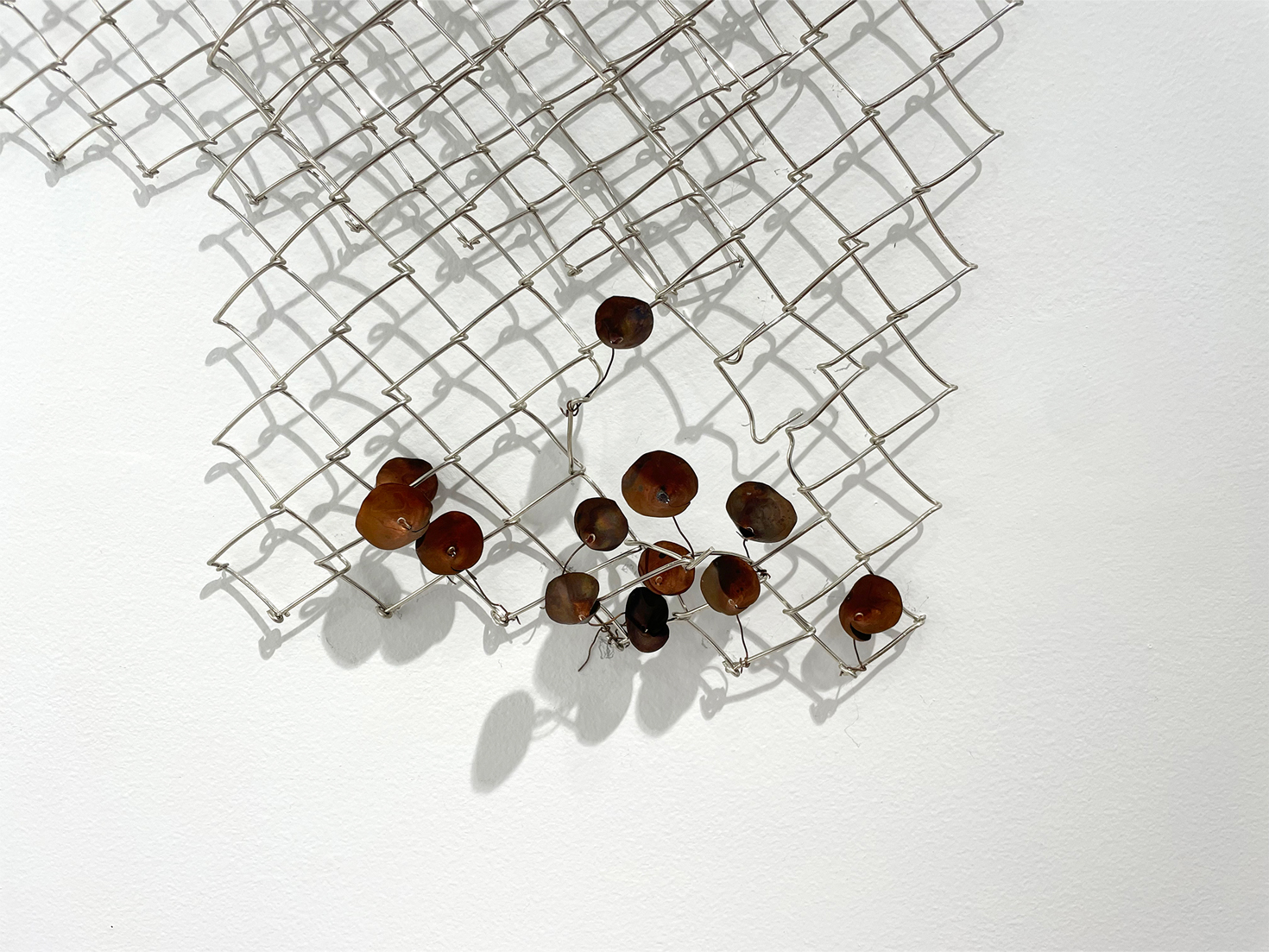
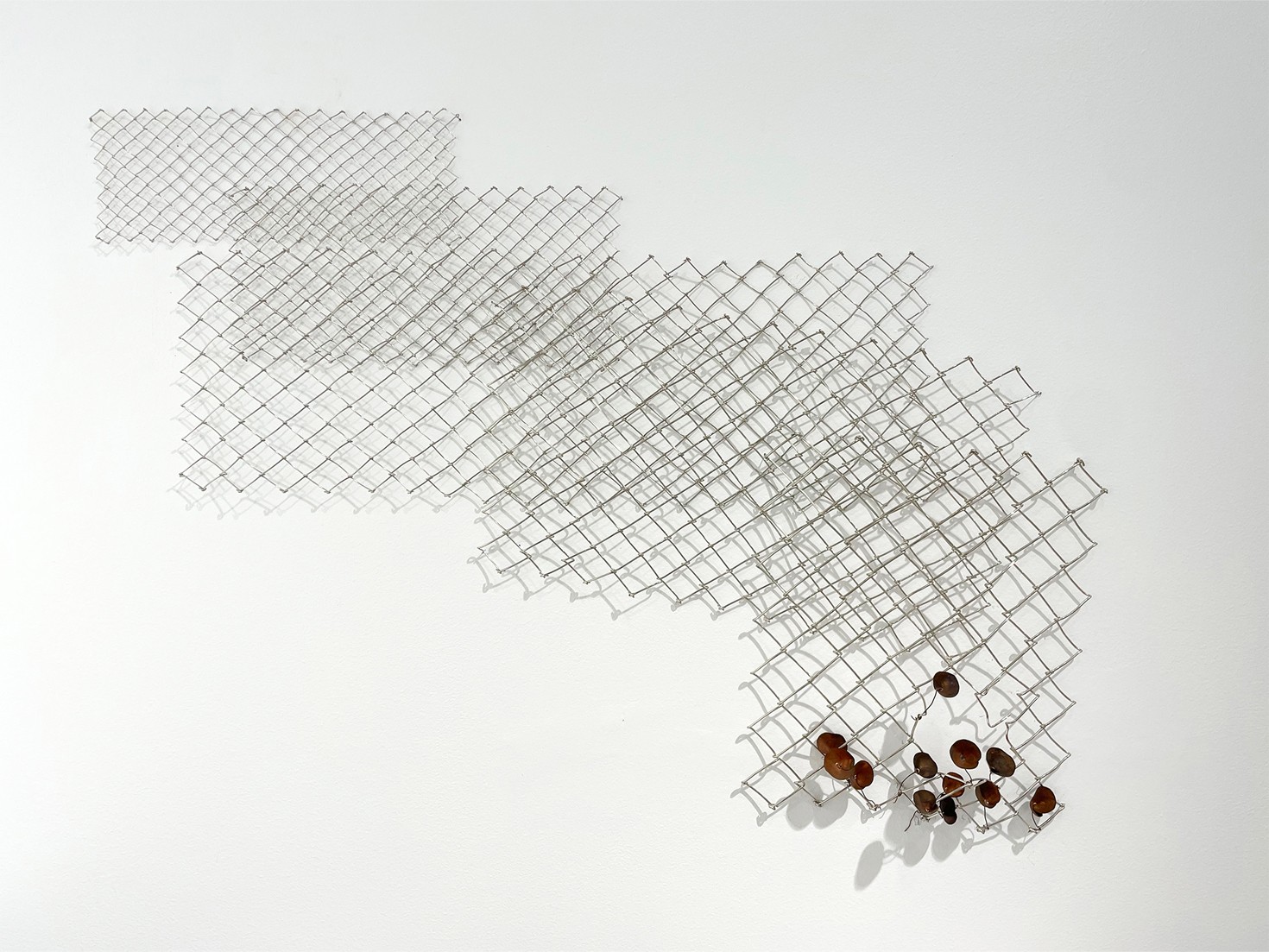
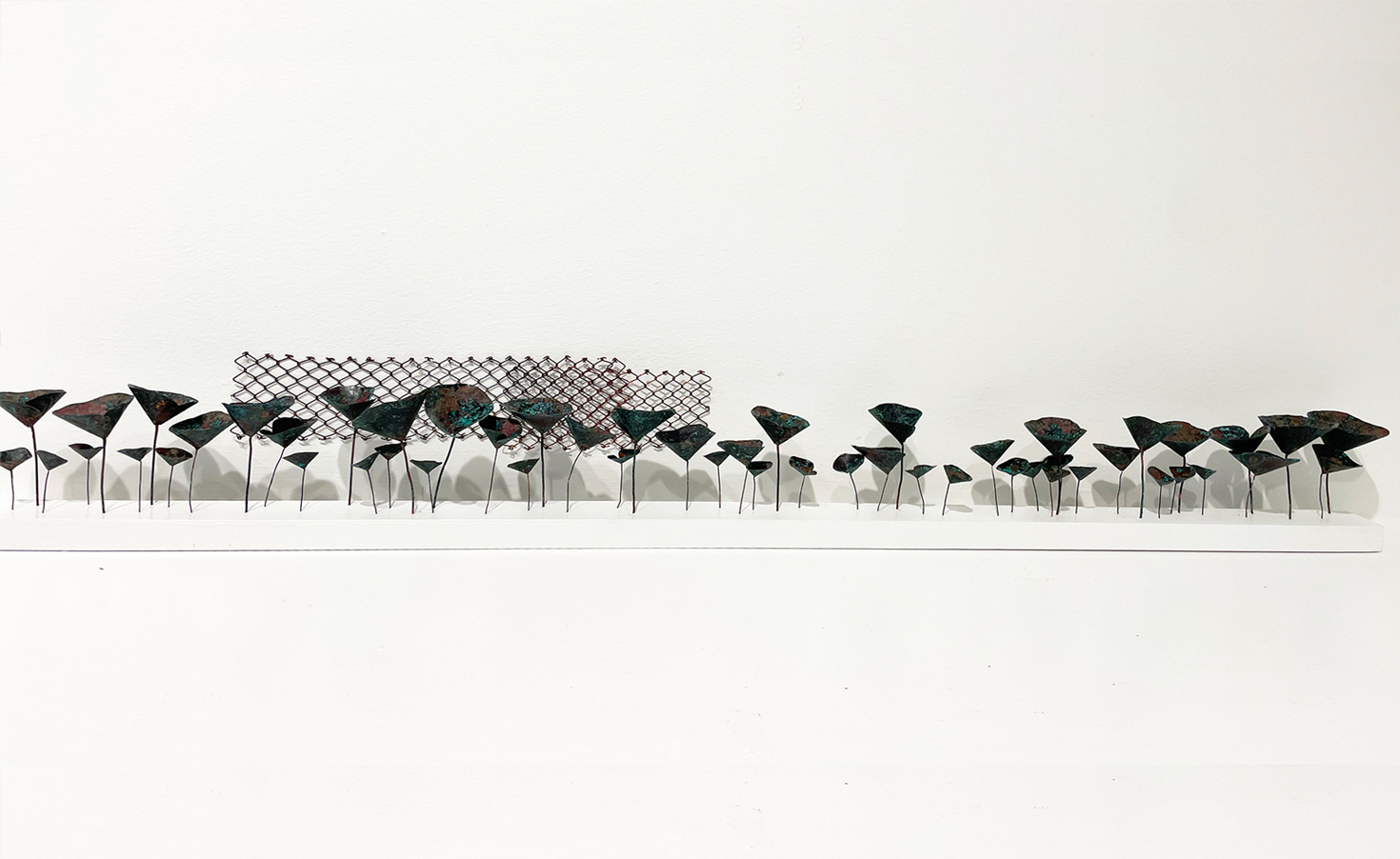
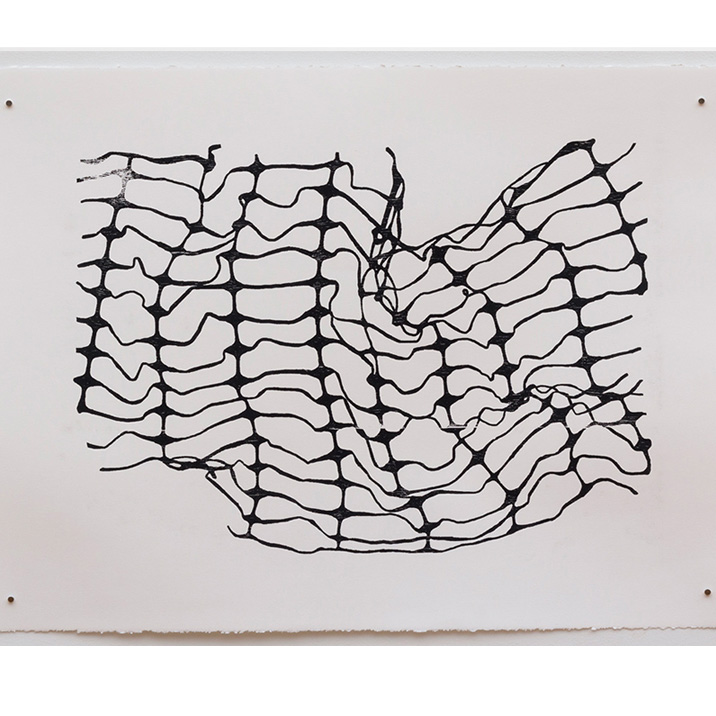
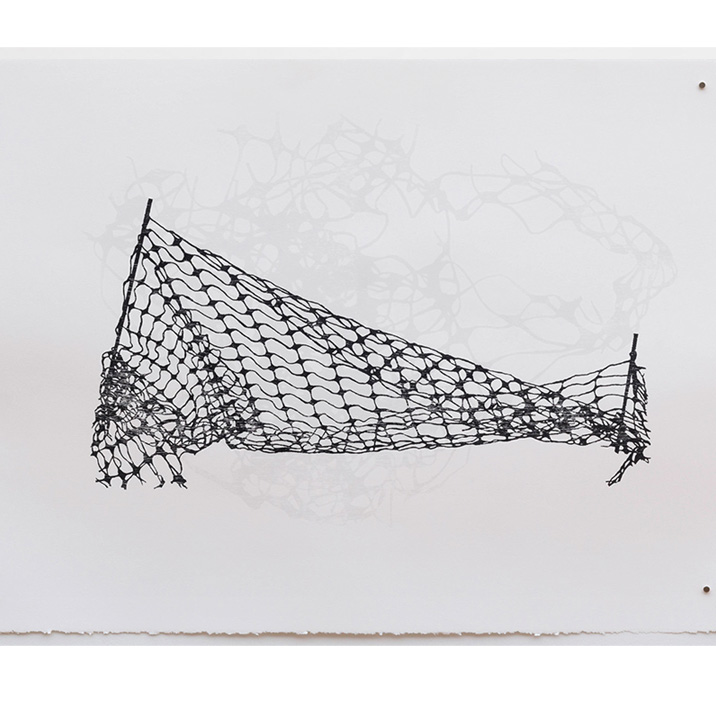
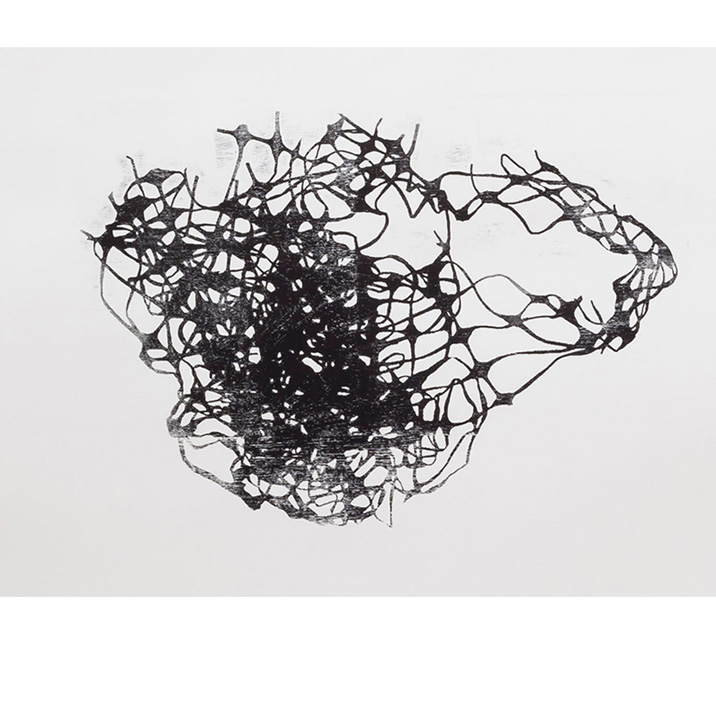
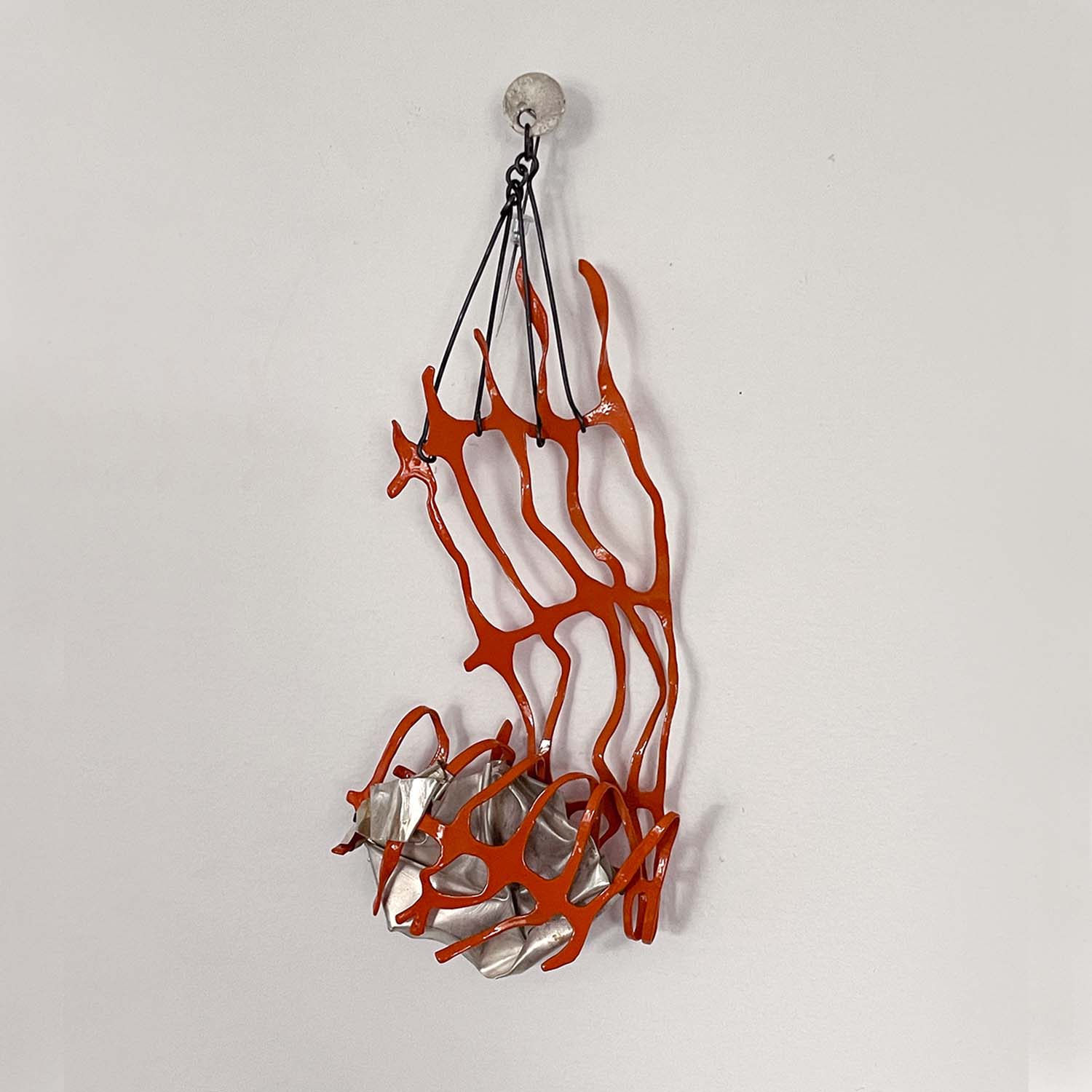
I am always looking at fences, through fences, around and above them. I think about what they are blocking, protecting, separating, barricading and what it would look like if they weren’t there. In an effort to make them blend into the environment with an open weave of steel wire or make them stand out with a bright safety orange color so you don’t injure yourself, I look at their repetition, form, and placement. In these drawings, I take them out of their original context and use them as forms to layer, stretch, manipulate color and scale to see what similarities and differences they each have.
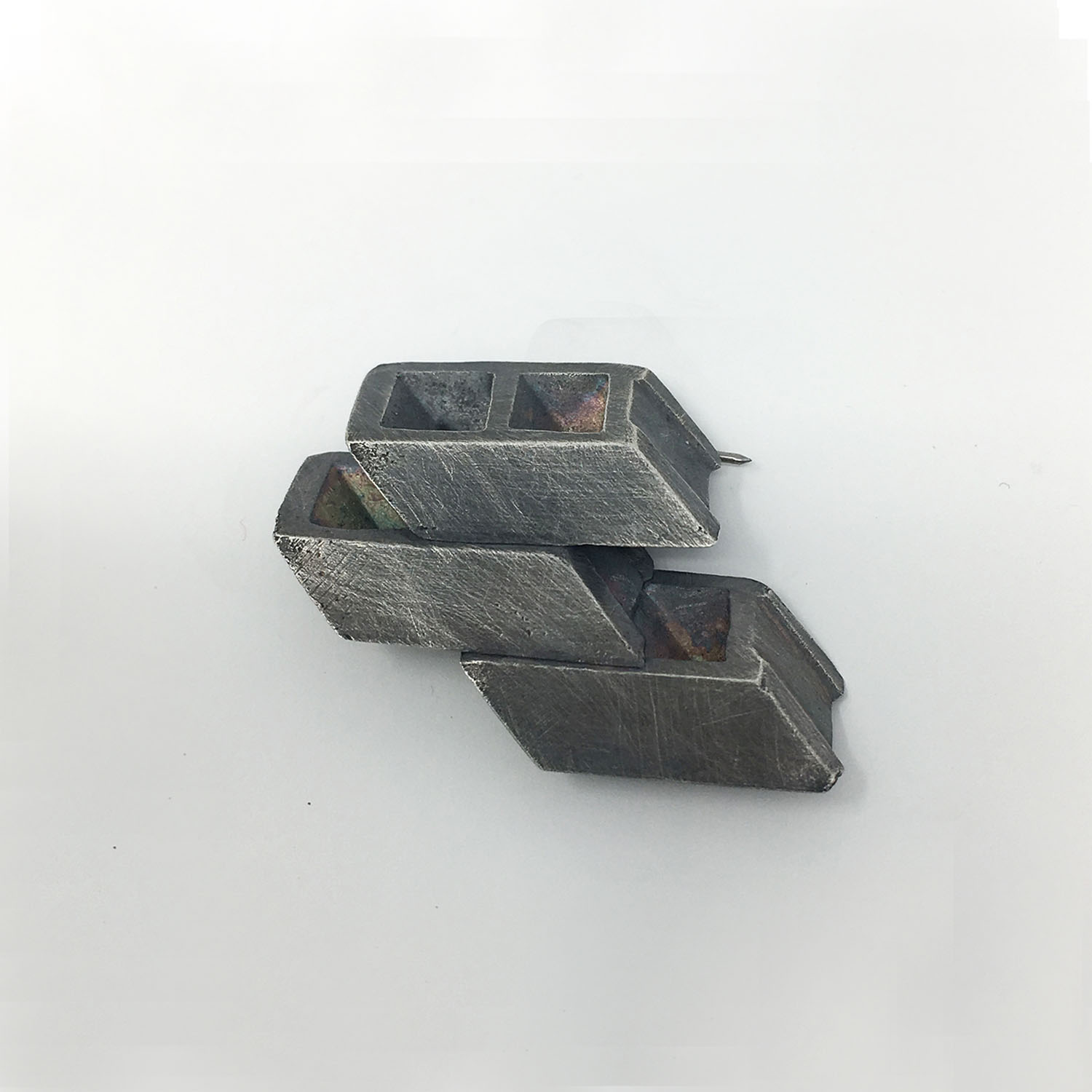
Cinderblocks, something heavy and usually hidden, become the center of attention in these pieces. Recreating the cinder blocks in silver and presenting them as jewelry changes our perception and how we value the mundane. The forced perspective of the blocks make them appear bigger than they actually are, in the same way we value diamonds, bigger they appear.
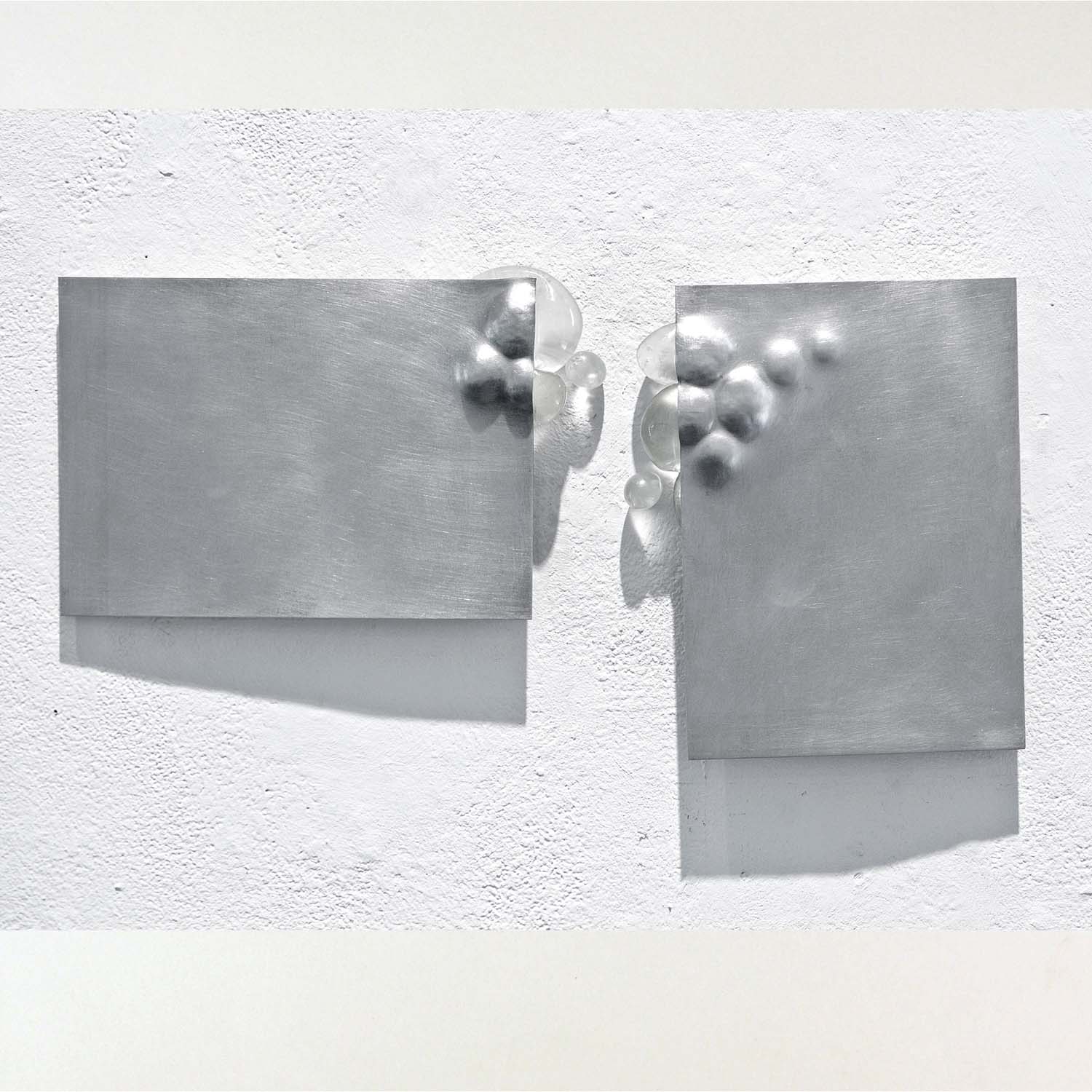
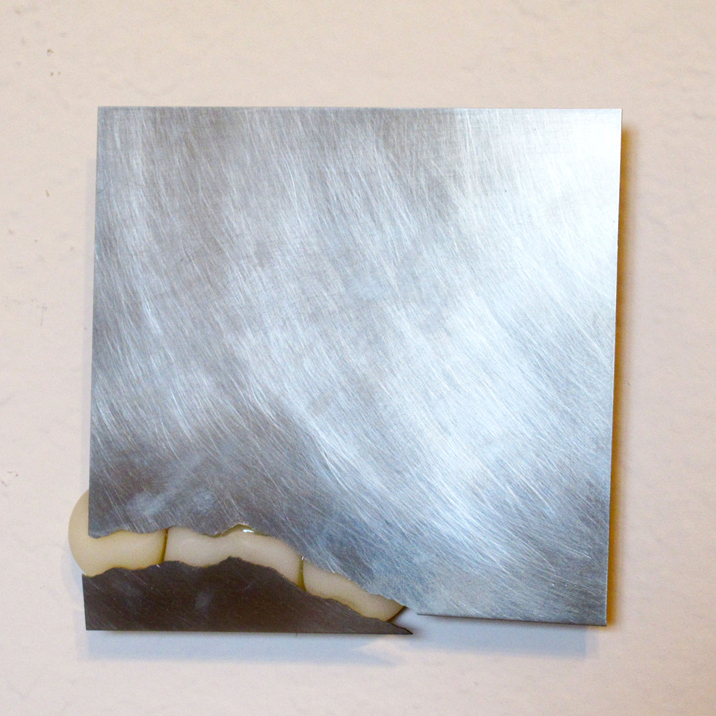
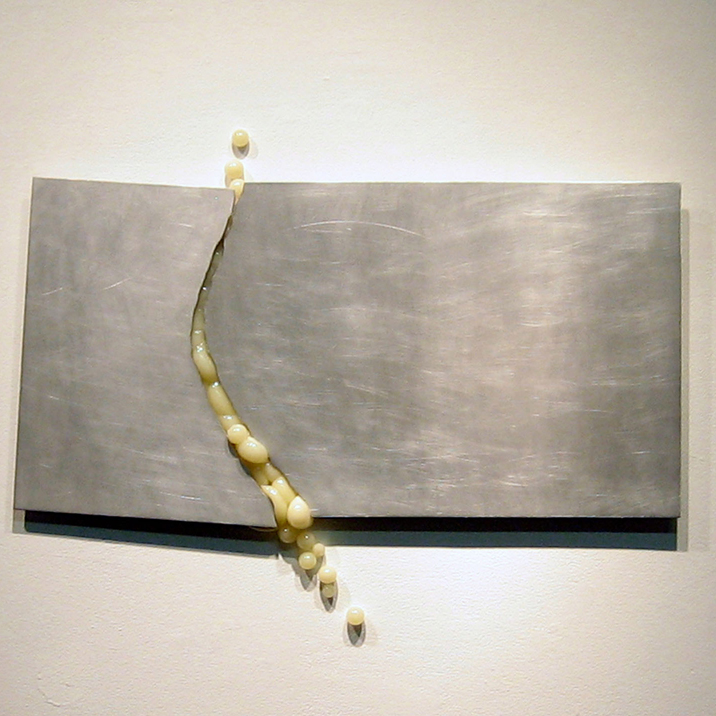
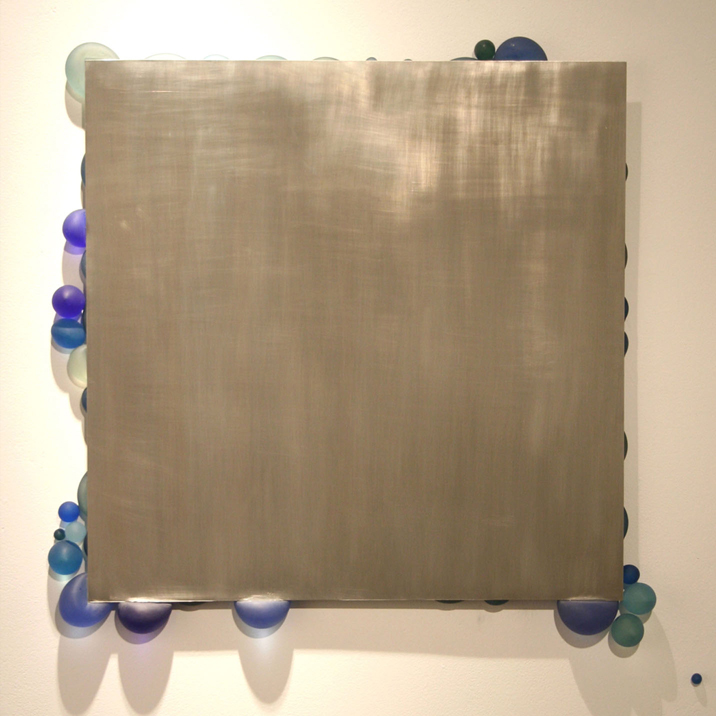
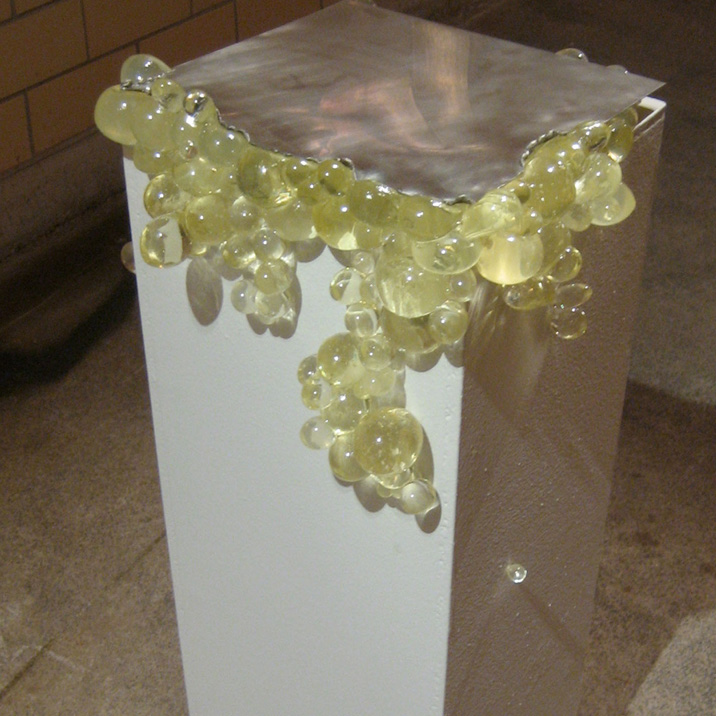
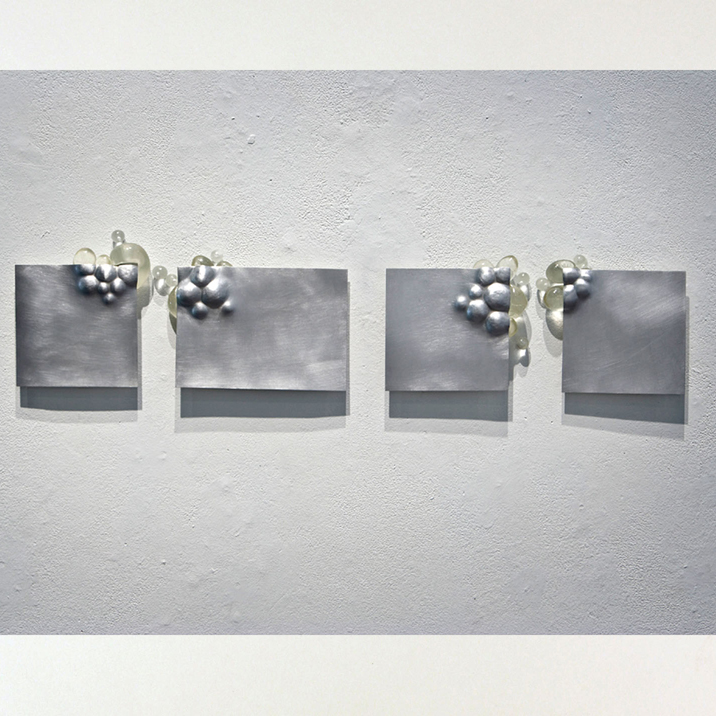
In this series of works I am interested in exploring the relationship between the physical properties of resin and metal. I am interested in the plasticity of metal as it responds to the resin visually is in direct contrast to the actual properties of the materials. The rigidity of the metal also forces the resin to form around, bulging through and sometimes spilling over the forms to emphasis the contrasting materials. The push and pull of materials continues to interest me and push the properties of both materials to their limits.
My work marries a functional, aesthetic, and conceptual approach to metal. She works with concepts of adornment to create works that use the body to engage in conversations that draw directly from her personal life.
I was trained as a jeweler years ago, which brought me to understand the intricacies of creating work that is personal to each person wearing it and expresses parts of their life. The choice to work with precious metals has been because of their inherent strengths and weaknesses. I value silver, both for its culturally relevant quality and for its beauty. I employ copper for its strength and abundance. I am, after all, interested in creating something beautiful and desirable.
As I continue to explore these personal narratives through these metals, themes that relate to my life as a mother begin to come through. My initial interest in small, intimate works, is finding a new source of expression that allows me to create intimate pieces that explore the relationships I have to my children.”
Natalie Macellaio grew up in the Chicago area and moved to Texas to receive her Masters of Fine
Arts from the University of North Texas in Jewelry and Metalsmithing. She is the Professor of
Art at Dallas College. Her work has been featured in galleries across the country.
Natalie
and Leslie Robertson co-created,"THE MOTHERLOAD", an international project which includes over
100 "mothers-who-are-artists", from 8 countries, and was exhibited at the Dallas Museum of Art
in 2014 and the Hannah MacLure Centre in Dundee, Scotland in 2016.
The National Ornamental
Metals Museum in Memphis,TN, hosted Natalie and Ana Lopez, "Reimagine" in 2023, where Natalie's
large installation is a permanent exhibit.
Natalie lives in Plano,TX with her family.